

Black Diamond Necklaces and Pendants for Women
Black diamonds are genuine diamonds, rated 10 on the Mohs hardness scale and identical in hardness and durability to colorless diamonds. Their opaque, deep black color and mirror-like surface luster create a visual character that no other gemstone replicates. Every necklace and pendant in this collection features a certified lab-grown black diamond set in 14K or 18K white gold, yellow gold, or rose gold with your choice of natural or lab-grown white diamond accents. Styles span halo pendants, heart designs, bar pendants, cluster drops, infinity forms, and graduated statement necklaces. Prices start at $458. All pieces are made in the USA with free shipping and easy financing.
Explore Our Black Diamond Necklaces and Pendants Collection











Real Customer Reviews
What Makes Black Diamond Necklaces Distinct
Black diamond necklaces occupy a category that sits entirely apart from colored gemstone and colorless diamond jewelry. Where colored gemstone necklaces derive their appeal from hue and where colorless diamond necklaces derive theirs from brilliance and fire, black diamond necklaces are about something different: surface, contrast, and graphic presence.
Black diamonds do not transmit or refract light in the way colorless diamonds do. They absorb it. The result is a stone with a polished, mirror-like surface luster rather than internal sparkle, a visual quality that reads differently against the skin and against clothing than any other stone in fine jewelry. Suspended on a chain at the neckline, a black diamond pendant does not catch the light in the conventional sense. It reflects the environment around it in a low, deep way that draws attention through restraint rather than brightness.
This quality gives black diamond necklaces their versatility and their staying power in contemporary jewelry. They suit formal occasions and casual wear equally, pair with virtually every outfit color, and work as statement pieces or as layered accents depending on scale. The appeal is aesthetic rather than symbolic in the traditional sense, which is why black diamond necklaces attract buyers across a wide range of ages, styles, and tastes.
Lab-Grown Black Diamonds: What They Are
Every black diamond in this collection is lab-grown. Lab-grown black diamonds are genuine diamonds, sharing the same chemical composition (carbon in cubic crystal structure) and the same 10 Mohs hardness as natural black diamonds. The difference is origin.
Black diamonds, both natural and lab-grown, get their color from a dense concentration of graphite inclusions distributed throughout the crystal. These inclusions absorb rather than reflect light, which is what creates the opaque, deep black appearance. Lab-grown black diamonds are produced using high-pressure, high-temperature (HPHT) or chemical vapor deposition (CVD) processes, with conditions calibrated to generate this graphite inclusion structure within the diamond crystal.
The result is a stone that is chemically and physically identical to a natural black diamond, typically with more uniform color distribution across the face of the stone. For a pendant where a single black diamond is the primary visual element and is observed close-up against the skin, this color consistency matters. Lab-grown black diamonds deliver a consistent, deep black across the entire face without the tonal patches that can appear in some natural stones. They also cost less than natural black diamonds of comparable size, making larger, more visually dramatic pendant formats accessible at lower price points.
How Black Diamonds Differ From Colorless Diamonds
Understanding how black diamonds behave optically is useful before choosing a pendant style, because the principles that govern great colorless diamond settings do not apply in the same way to black diamonds.
Colorless diamonds derive their value from brilliance, fire, and scintillation, the way they transmit, refract, and return light as white and spectral flashes. Cut quality in a colorless diamond is primarily about maximizing this light performance. Prong settings that minimize metal coverage and maximize light entry are favored.
Black diamonds work differently. Because they absorb rather than transmit light, cut quality in a black diamond is primarily about surface polish and outline precision rather than internal light performance. The stone's visual impact comes from its face and edges, not from what happens inside it. This is why black diamonds in pendant applications often perform better in bezel and flush settings that emphasize the stone's silhouette, and why halo settings that surround the black diamond with colorless diamonds are particularly effective: the white diamonds provide the brilliance the black center cannot, creating a dynamic contrast in a single design.
It is also why bar settings suit black diamonds well. Princess-cut and baguette-cut black diamonds in horizontal or vertical bar configurations emphasize the stone's geometry and outline, which are exactly the qualities black diamonds have to offer.
Black Diamond Necklace and Pendant Styles
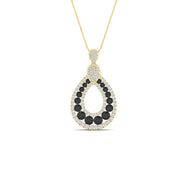
Halo pendants pair a black diamond center with a surrounding ring of colorless diamonds. The contrast between opaque black and white diamond brilliance is one of the most visually striking combinations in fine jewelry, and it works particularly well in pendant format where the piece is viewed in isolation against the skin. The oval halo pave drop necklace combines an oval black diamond center with a full pave diamond surround in a drop setting. The double halo round pendant places two concentric diamond rings around a round black diamond, creating the collection's most architecturally complex design. The charming cushion halo round pendant frames a round black diamond in a cushion-shaped diamond surround for a softer, vintage-influenced silhouette.
Heart pendants form the largest style category. Black diamond heart pendants create an unexpected pairing: the heart form's conventional romantic associations combined with the stone's unconventional bold aesthetic. The result is personal and deliberate in a way that a standard diamond heart pendant is not.
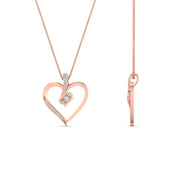
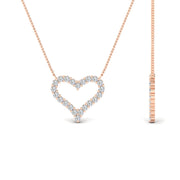
Open heart designs include the open heart necklace pendant, open heart pendant necklace, open heart design ladies pendant, necklace with open heart pendant, and double heart open pendant, each using the heart outline as the primary form with black diamond accents along the metalwork. The negative-space aesthetic of open heart designs suits black diamonds because the dark stones anchor the metalwork visually without filling the form entirely.
Closed and solitaire heart designs place a black diamond directly into a heart-shaped mount. The solitaire heart pendant places a round black diamond in a prong-set heart mounting. The heart infinity love pendant combines the heart motif with an infinity loop, creating symbolic resonance about enduring connection.
Multi-heart designs include the cute dual heart pendant, 3-stone round heart pendant, and double heart pendant for women, each offering different scales of visual complexity within the heart format.
Bar pendants are particularly well-suited to black diamonds because the stone's graphic character is amplified by geometric, linear settings. The princess cut horizontal bar pendant arranges square-cut black diamonds in a horizontal row. The 5-stone princess cut bar pendant places five square-cut black diamonds in a graduated or uniform line. These designs suit contemporary and minimalist aesthetics and work well with V-necklines where the horizontal pendant reads parallel to the collar.
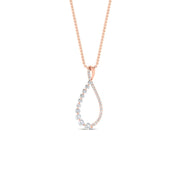
Cluster and drop pendants group stones in organic or radiating arrangements. The pear drop diamond cluster pendant combines a pear-shaped black diamond center with colorless diamond accents in a drop setting that creates movement and layered visual depth. The multi-ring interlocked pendant stacks circular metal elements with black diamond accents in an architectural stack with strong graphic character.
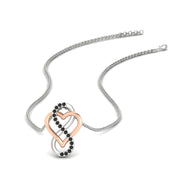
Infinity and floating pendants include the infinity style floating pendant, which places black diamonds within an open infinity form, creating the impression of stones suspended within the metalwork. The two-tone infinity pendant pairs a black diamond with an infinity motif in mixed metals, a design with contemporary symbolic resonance about continuity.
Graduated and smile necklaces curve multiple black diamonds across the décolletage in a crescent formation. The graduated smile necklace and graduated smile necklace for her both use progressively sized black diamonds from center outward, creating a sweeping arc of deep black that reads as a statement piece rather than a pendant on a chain. These are the highest-impact designs in the collection and work as standalone statement pieces for formal occasions.
Five-stone and two-stone designs offer scaled multi-stone configurations. The 0.50 carat five-stone round diamond pendant necklace with black diamond places five black diamonds in a row with diamond accents. The two-stone round pendant pairs two black diamonds together.
Symbolic and motif pendants include the moon pendant, which sets a black diamond in a crescent moon form. The graphic, celestial character of the crescent moon suits the bold aesthetic of black diamond particularly well, creating a pendant with strong visual identity and a pointed, deliberate design language.
Black Diamond and White Diamond: The Two-Stone Contrast
The most consistent design principle across this collection is the pairing of black and white diamonds. This combination works because it is the maximum contrast available within a single material category. Both are diamonds, both are carbon, both rate Mohs 10, but one absorbs light and one returns it. Set together, they define each other in a visual opposition that is immediate and compelling at any distance.
In halo designs, the white diamond surround makes the black center appear deeper and more intense. The diamonds' brilliance creates a bright frame around the dark focal point, directing attention inward. In bar and multi-stone designs, alternating or flanking white diamonds create rhythm and movement against a black baseline. In cluster designs, the white diamond accents around a black center produce a tonal gradient that adds visual depth.
Natural and lab-grown white diamond accents are both available across this collection. Lab-grown diamond accents provide more diamond coverage at lower prices. Natural diamond accents carry provenance value for buyers for whom origin matters.
Metal Pairings for Black Diamond Necklaces
White gold and platinum create the sharpest contrast with black diamonds. The cool, bright metal against deep opaque black is graphic and immediate, giving black diamond necklaces in white metal a clean, high-contrast character that suits contemporary and formal aesthetics equally. Platinum is more durable long-term, hypoallergenic, and requires no rhodium plating. White gold costs less at purchase but requires periodic replating.
Rose gold is the most popular current metal pairing for black diamonds. The warm pinkish-rose tone against deep black creates an editorial, fashion-forward contrast that reads as both bold and romantic. Rose gold black diamond necklaces are particularly effective in heart pendant and cluster designs, and the combination has strong presence on social media and in contemporary fashion contexts.
Yellow gold creates the highest warmth contrast against black and carries strong art deco precedent. Black and gold is one of the most enduring two-tone design combinations across all creative disciplines, from architecture and graphic design to fashion and jewelry. Yellow gold black diamond necklaces have a graphic, historically resonant quality that distinguishes them from both white and rose metal versions.
All pieces are available in 14K and 18K versions of each metal. 14K gold is harder and more scratch-resistant. 18K gold carries higher pure gold content and richer color tone.
Necklace Length and Black Diamond Pendants
Chain length determines how a black diamond pendant presents against the body and how it interacts with necklines and clothing.
A 16-inch chain sits at the collarbone, the most versatile everyday length for most pendant styles in this collection. It works with V-necks, crew necks, and open collars and keeps the pendant visible against the upper chest.
An 18-inch chain drops just below the collarbone. This length suits larger pendants including the halo designs, cluster drops, and multi-ring interlocked pendant, where the piece benefits from sitting against the upper chest rather than at the throat.
A 20-inch chain positions the pendant at the upper chest or bust line, suited to statement pendants including the graduated smile necklaces and larger halo designs intended to be focal points of the outfit.
A 24-inch chain drops to the mid-chest and works well for layering. Black diamond pendants layer naturally with plain gold chains or thin diamond accent chains at shorter lengths, where the black stone anchors the stack visually.
Styling Black Diamond Necklaces
Black diamond pendants pair with virtually every outfit color because black is the most neutral of all jewelry tones. Unlike colored gemstones that create complementary or contrasting relationships with clothing, black diamonds work with every palette without modification.
Against white and light-colored clothing, black diamond pendants read as maximum contrast, bold and graphic. Against black clothing, they read as tonal depth, the stone distinguished from the fabric by its surface luster rather than color opposition. Against colored clothing, the black diamond reads as an anchor, a neutral focal point that grounds the outfit without competing.
For layering, black diamond pendants work best as the deepest-toned element in a stack. Layer a delicate black diamond pendant with a plain gold chain and a thin colorless diamond station necklace. The three elements create a tonal gradient from dark to light that reads as composed and intentional.
For pairing with other jewelry, black diamond pendant necklaces coordinate naturally with black diamond stud earrings or black diamond hoops. They also work well alongside colorless diamond earrings, where the contrast between the dark pendant and bright earrings creates the same black-and-white dynamic that appears within the pendant designs themselves.
Black Diamond Necklace Care
Black diamonds require specific care considerations distinct from colorless diamonds, due to their graphite inclusion structure.
Clean black diamond necklaces with warm water, mild dish soap, and a soft-bristle brush only. Scrub gently around the pendant setting and stone, rinse thoroughly, and dry with a lint-free cloth. Routine manual cleaning is both safe and effective for black diamonds.
Do not use ultrasonic cleaners on black diamond necklaces. The graphite inclusions that give black diamonds their color make the stone more susceptible to internal fracturing under ultrasonic vibrations than clean colorless diamonds. This applies to lab-grown black diamonds as well as natural ones.
Do not use steam cleaners. Sudden thermal shock from steam can stress the stone along fracture planes.
Apply perfume and hairspray before putting on the necklace. Chemical products do not damage the diamond directly but can affect metal finishes and accumulate in settings over time.
Store black diamond necklaces separately from other jewelry to prevent the chain from tangling and to avoid the diamond's hardness abrading softer metal surfaces.
FAQs For Black Diamond Necklaces and Pendants for Women
1. Are black diamonds real diamonds?
Yes. Black diamonds are genuine diamonds composed of carbon in the same cubic crystal structure as colorless diamonds. They share Mohs 10 hardness and are distinguished from colorless diamonds only by their graphite inclusion content, which creates the opaque black color.
2. Are lab-grown black diamonds treated to achieve their color?
No. Lab-grown black diamonds at Fascinating Diamonds achieve their black color through the same graphite inclusion structure that occurs in natural black diamonds, produced during the HPHT or CVD growth process. They are not post-growth treated or irradiated to create the color.
3. Do black diamond pendants sparkle?
Black diamonds do not produce the internal brilliance and fire of colorless diamonds. They produce surface luster, a polished, mirror-like reflection from their facets. The visual effect is deep, graphic, and bold rather than bright.
4. Are black diamond necklaces durable enough for everyday wear?
Yes. Black diamonds rate 10 on the Mohs hardness scale and resist scratching from all everyday contact. The graphite inclusions that create the black color make them somewhat more brittle than clean colorless diamonds under sharp blunt impact, but for a pendant worn on a chain, they are fully suitable for daily wear.
5. Can I clean a black diamond necklace with an ultrasonic cleaner?
No. Ultrasonic cleaning is not recommended for black diamonds. The graphite inclusion density makes the stone susceptible to fracturing under vibration. Clean only with warm water, mild soap, and a soft brush.
6. What metal looks best with a black diamond necklace?
Rose gold is the most popular current choice for its warm, editorial contrast. White gold and platinum provide maximum graphic contrast. Yellow gold creates a bold, art deco-adjacent combination. All are available in this collection.
7. How do I style a black diamond pendant necklace?
Black diamonds are the most versatile pendant stone for clothing coordination because they are neutral against every palette. Layer with plain gold chains or thin diamond station necklaces. Pair with black diamond or colorless diamond earrings. The stone's surface luster reads clearly at every neckline.
8. What is the price range for black diamond necklaces at Fascinating Diamonds?
Prices in this collection start at $458 and reach $14,775 across 61 designs in multiple pendant styles, metal types, and white diamond accent configurations.
9. Are black diamond necklaces appropriate as gifts?
Yes. Their bold, unconventional aesthetic makes them particularly appropriate for buyers who want to give something distinctive rather than conventional. They suit birthdays, anniversaries, and milestone celebrations where the recipient has a personal style that diverges from mainstream fine jewelry conventions.