

Marquise Cut Engagement Rings
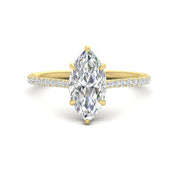
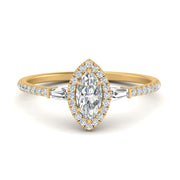
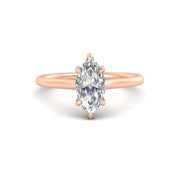
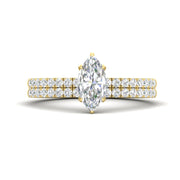
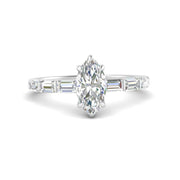
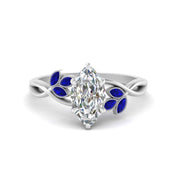
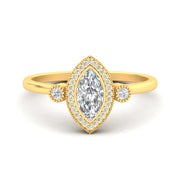
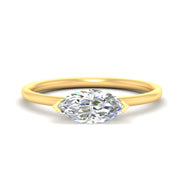
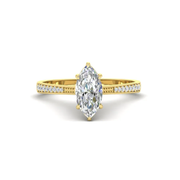
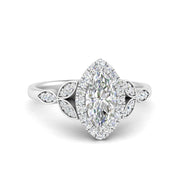
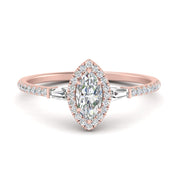
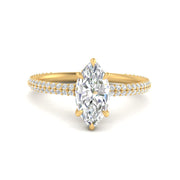
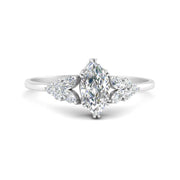
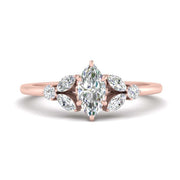
Marquise cut diamond engagement rings feature an elongated silhouette with pointed tips at both ends, producing one of the largest face-up appearances of any diamond shape at the same carat weight. The cut combines a 58-facet brilliant arrangement with a narrow, dramatic outline that visually lengthens the finger and delivers strong sparkle across solitaire, halo, east-west, and vintage settings. Fascinating Diamonds offers 100+ marquise cut engagement rings in natural and lab grown diamonds, available in platinum, white gold, yellow gold, & rose gold.
Explore Our Marquise Diamond Engagement Rings Collection




















Real Customer Reviews
Marquise Cut Diamond Engagement Rings: The Complete Guide
The marquise cut has one of the most specific origin stories in diamond history. According to well-documented accounts, King Louis XV of France commissioned the shape in the mid-18th century, requesting a diamond cut to mimic the shape of the lips of Jean Antoinette Poisson, the Marquise de Pompadour. The elongated, pointed oval that resulted became named after her title. Nearly three centuries later, the marquise remains one of the most visually distinctive diamond shapes in fine jewelry, chosen not for tradition but for impact.
What makes the marquise cut technically interesting is its efficiency. The shape's elongated outline and pointed ends maximize the stone's face-up surface area relative to its depth, which means a marquise diamond consistently appears larger than a round, cushion, or princess cut diamond of identical carat weight. For buyers who want visual presence without paying for additional carat weight, the marquise cut is one of the most practical choices available. Before selecting a stone, read How to Buy a Marquise Diamond: What Really Matters Before You Choose One for a complete pre-purchase guide.
Marquise Cut Diamond Proportions: Length-to-Width Ratio
The length-to-width ratio is the single most important proportional decision when selecting a marquise cut diamond. The ideal range is 1.75 to 2.25. A ratio at the lower end of that range, around 1.75 to 1.85, produces a wider, fuller marquise that looks bold and substantial on the finger. A ratio at the higher end, around 2.10 to 2.25, produces a slender, dramatically elongated shape that maximizes finger coverage and the illusion of length. Most buyers find the 1.90 to 2.10 range to be the most balanced, offering clear elongation without looking too narrow from a top-down view. For a full size comparison across diamond shapes, see Do Marquise Diamonds Look Bigger? A Size Comparison Guide for Buyers.
Ratios below 1.75 start to look stubby and lose the defining characteristic of the marquise shape. Ratios above 2.25 can look overly thin and make the bow-tie effect more pronounced.
The Bow-Tie Effect in Marquise Cut Diamonds
The bow-tie effect is a dark shadow that appears across the center of some fancy elongated diamond shapes, including marquise, oval, and pear cuts. It's caused by light leaking through the center of the stone rather than reflecting back to the eye, and it's visible as a dark band running horizontally across the diamond's widest point.
Some degree of bow-tie is present in virtually all marquise cut diamonds. The question is severity. A faint bow-tie is normal and doesn't detract from the diamond's appearance. A strong, dark bow-tie is a cut quality problem and reduces the stone's brilliance significantly. Because bow-tie severity isn't captured in a grading report, it must be evaluated visually through video or in-person inspection. When selecting a marquise cut diamond at Fascinating Diamonds, request stone-specific video to assess bow-tie before purchase.
Marquise Cut vs. Other Fancy Shapes
Marquise vs. Oval: Both shapes elongate the finger, but they produce different silhouettes. Oval cuts have fully rounded ends and a softer, more approachable outline. Marquise cuts have sharp pointed tips that create a more dramatic, angular profile. Marquise diamonds typically appear larger face-up than ovals at the same carat weight because the pointed ends extend the visible surface area further. Oval cuts are currently more popular overall, which means marquise cuts are a stronger choice for buyers who want something less common.
Marquise vs. Pear: Pear shaped diamonds taper to a single point at one end and are rounded at the other, creating an asymmetrical teardrop. Marquise cuts are fully symmetrical, with matching points at both ends. Buyers who prefer a centered, balanced diamond with a strong axis of symmetry typically choose marquise over pear. Both shapes require a V-prong at the pointed tip.
Marquise vs. Round: Round brilliant diamonds produce the highest light return of any shape due to their optimized symmetrical facet arrangement. Marquise cuts produce strong brilliance but prioritize visual size over maximum light return. Marquise diamonds are typically 20 to 30 percent less expensive per carat than round diamonds of comparable quality, making them a compelling alternative for size-conscious buyers.
Best Settings for Marquise Cut Engagement Rings
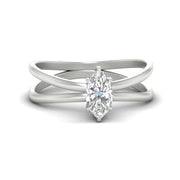
Solitaire Engagement Rings: A classic four or six-prong solitaire is the most common setting for a marquise cut diamond. The V-prongs at each pointed tip are non-negotiable, without them, the points are directly exposed and vulnerable to chipping. A thin, plain band complements the marquise's elongated silhouette best, keeping visual weight on the center stone rather than the shank. For guidance on matching bands, see How to Pair a Marquise Engagement Ring with a Wedding Band.
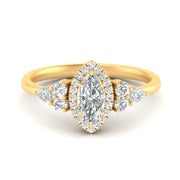
Halo Engagement Rings: A halo of round accent diamonds traces the outline of the marquise, increasing the apparent size of the center stone and reinforcing the elongated silhouette. Halo settings also provide additional protection for the pointed tips by surrounding them with metal and melee diamonds. A marquise halo ring in white gold or platinum with a 1-carat center stone can visually present as a 1.5-carat ring, making halos one of the highest-value-per-dollar combinations in this shape.
East-west Engagement Rings: An east-west setting rotates the marquise 90 degrees so the points run horizontally across the finger rather than vertically along it. This modern orientation enhances the finger's apparent width rather than its length and creates a distinctive, fashion-forward look. East-west marquise rings have grown significantly in popularity over the past five years and are one of the strongest trending styles in the non-traditional engagement ring market.
Vintage and Art Deco Engagement Rings: The marquise cut's angular, elongated form is a natural fit for vintage-inspired settings featuring milgrain edges, filigree, and geometric pavé patterns drawn from Art Deco design. Yellow gold vintage marquise rings in particular have seen strong demand, driven partly by the broader revival of yellow gold in fine jewelry.
Marquise Cut Diamond Durability and Everyday Wear
The pointed tips at both ends of a marquise cut diamond are the primary durability concern. Diamond is the hardest natural material, but pointed tips and thin edges are vulnerable to chipping on impact, particularly if struck against a hard surface at the right angle. The solution is straightforward: V-prongs at both tips, properly sized and positioned to cup and protect the points without obscuring the diamond's silhouette.
With correct V-prong protection and a well-constructed setting, marquise cut engagement rings are entirely suitable for everyday wear. The elongated shape also sits lower on the finger than some other cuts at the same carat weight, which reduces the likelihood of the ring catching on fabric or surfaces during daily activity.
Natural vs. Lab Grown Marquise Cut Engagement Rings
Fascinating Diamonds offers marquise cut engagement rings in both natural and lab grown diamonds across all carat weights and settings. Natural marquise diamonds are GIA or IGI certified, carry the rarity and provenance of mined stones, and are the preferred choice for buyers who prioritize long-term collectible value. Lab grown marquise diamonds are chemically and optically identical to natural diamonds and typically cost 50 to 70 percent less per carat at equivalent quality grades.
The marquise cut is a shape where lab grown options deserve particular consideration. Because the bow-tie effect and symmetry quality are so critical for this shape, a lower price per carat allows you to be selective. You can evaluate more stones, pass on ones with visible bow-tie, and still land within budget. That flexibility is harder to access at natural diamond price points.
Metal Options for Marquise Cut Engagement Rings
Platinum and white gold are the most popular choices for marquise cut rings. The cool neutral tone creates a clean, uninterrupted backdrop that lets the diamond's elongated silhouette and brilliance read at full intensity. White gold is the more affordable option. Platinum is denser, heavier, and more resistant to wear over time, making it the preferred metal for heirloom-quality rings.
Yellow gold pairs especially well with marquise cuts in the G-J color range. The warm tone of the metal complements the diamond's natural fire and produces a rich, vintage-inspired combination. Yellow gold marquise solitaires and east-west settings are currently among the most searched marquise ring styles.
Rose gold softens the sharp, angular silhouette of the marquise cut and creates a romantic, contemporary aesthetic. It pairs particularly well with halo and pavé settings where the blush metal tone interacts with the sparkle of the accent stones.
Shop Marquise Cut Engagement Rings at Fascinating Diamonds
All marquise cut engagement rings at Fascinating Diamonds are manufactured in the USA and available with full customization across metal type, carat weight, setting style, and diamond origin. Contact our team at +1 (212) 840-1811 for stone-specific guidance, including bow-tie assessment and ratio recommendations. Free shipping and easy returns on all orders.
FAQs For Marquise Cut Engagement Rings
Do marquise diamonds chip easily?
Marquise diamonds don't chip easily under normal wear, but the pointed tips at both ends are the most vulnerable part of the stone. Diamond is the hardest natural material, but thin pointed edges can chip if struck against a hard surface at the wrong angle. The fix is a well-designed V-prong at each tip, which cups and protects the point during everyday wear. With proper setting design, marquise cut engagement rings are fully suitable for daily use.
Are marquise engagement rings outdated?
No. Marquise cut engagement rings have seen consistent resurgence in demand over the past several years, driven by the broader trend toward non-round fancy shapes. The east-west marquise setting in particular has become one of the strongest trending engagement ring styles. The cut's combination of finger-lengthening proportions, large face-up appearance, and lower price per carat relative to round diamonds makes it a practical and distinctive choice rather than a dated one.
Are lab grown marquise diamonds worth it?
Yes, and particularly so for this shape. Because marquise cuts are sensitive to bow-tie severity and symmetry quality, the lower cost per carat of lab grown options gives you more room to be selective. You can evaluate more stones, reject those with visible bow-tie, and prioritize symmetry and color grade without exceeding budget. Lab grown marquise diamonds are chemically and optically identical to natural diamonds and typically cost 50 to 70 percent less at equivalent quality grades.
What setting makes a marquise diamond look bigger?
A halo setting has the strongest size-amplifying effect on a marquise cut diamond, surrounding the stone with accent diamonds that extend its visual footprint. Pairing a halo with a thin pavé band maximizes the contrast between the center stone and the shank, making the diamond appear larger. An east-west orientation also enhances perceived size by spreading the diamond's width horizontally across the finger. Choosing a higher length-to-width ratio, around 2.00 to 2.15, further maximizes face-up surface area.
Are marquise engagement rings good for everyday wear?
Yes, with the right setting. The main consideration is V-prong protection at both pointed tips to prevent chipping. Beyond that, the marquise cut's elongated shape actually sits relatively low on the finger compared to other cuts at the same carat weight, which reduces snagging risk during everyday activity. A well-constructed marquise engagement ring with secure prong settings is practical for daily wear without compromising the diamond's appearance or safety.