

Princess Cut Engagement Rings for Women
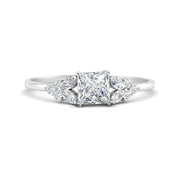
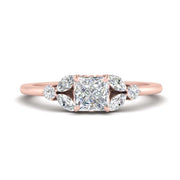
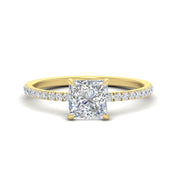
Princess cut engagement rings offer sharp brilliance, a modern square shape, and excellent value. Choose from solitaire, halo, and hidden halo styles in lab grown or natural diamonds.
Explore Our Princess Cut Engagement Rings Collection
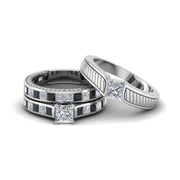


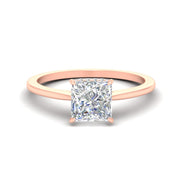

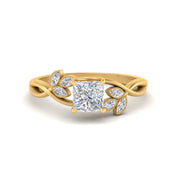

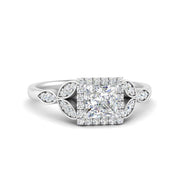















Real Customer Reviews
Princess Cut Diamond Engagement Rings: The Complete Guide
The princess cut is the second most popular diamond shape in the world after the round brilliant, and it's held that position consistently for decades. That's not an accident. The cut was developed in the early 1960s and refined through the 1970s and 1980s specifically to maximize the brilliance of a square diamond, solving a problem that had challenged diamond cutters for centuries: how to get round-diamond-level sparkle from a shape with corners. The result is a modified brilliant cut that delivers fire and light return that no other square shape — not the cushion, not the radiant, not the Asscher — can match at the same price point.
What makes the princess cut commercially durable is its combination of optical performance and value. Princess cut diamonds cost 15 to 30 percent less per carat than round diamonds of equivalent quality because the square shape retains significantly more rough diamond during cutting. That savings translates directly into buying power: at the same budget, a princess cut buyer can typically access a larger stone, a better color grade, or a more elaborate setting than they could with a round brilliant.
Princess Cut Diamond Proportions: Length-to-Width Ratio and Cut Quality
The ideal length-to-width ratio for a princess cut diamond is between 1.00 and 1.05. A ratio of exactly 1.00 produces a perfect square, which is the most desirable shape for this cut. Ratios between 1.01 and 1.05 are acceptable and produce a shape that reads as square to the naked eye. Ratios above 1.10 start to look noticeably rectangular, which moves the diamond away from the defining characteristic of the princess cut. For a complete breakdown of how ratio affects sparkle, symmetry, and overall appearance, read Best Princess Cut Diamond Ratio: What Buyers Should Know before selecting a stone.
Beyond the ratio, three additional quality factors matter significantly for princess cuts. First, symmetry and corner alignment — all four corners should be sharp, equal in angle, and precisely aligned. Uneven corners produce a diamond that looks unbalanced from above. Second, depth percentage — a well-cut princess should have a total depth between 65 and 75 percent of its diameter to maximize light return without sacrificing face-up size. Diamonds cut too shallow lose brilliance. Diamonds cut too deep look smaller than their carat weight suggests. Third, table size — a table percentage between 65 and 75 percent supports strong light dispersion across the entire face of the stone.
Unlike round brilliants, princess cuts don't have a standardized cut grade on GIA reports. This means cut quality must be evaluated through the combination of proportions, symmetry grade, and visual inspection rather than relying on a single grade.
Princess Cut vs. Round Cut Diamond Engagement Rings
The princess cut and round brilliant are the two most purchased diamond shapes for engagement rings and the comparison between them is the most common decision buyers face in this category.
Brilliance and light performance: Round brilliants produce the highest light return of any diamond shape due to their perfectly symmetrical 57-facet arrangement, which has been mathematically optimized for maximum light reflection. Princess cuts produce strong brilliance and significantly more fire — the colored light dispersion — through their modified brilliant facet pattern. For buyers who want maximum white light return, the round is the technical winner. For buyers who want more fire and colored sparkle, the princess cut often delivers a more dynamic visual performance.
Face-up size and shape: Princess cuts appear slightly larger face-up than round diamonds of the same carat weight because the square outline spreads the stone's mass across a wider surface area with less depth. The geometric, structured silhouette of the princess cut also reads as more modern and bold than the classic round outline.
Price: Princess cut diamonds are typically 15 to 30 percent less expensive per carat than round diamonds at equivalent quality grades. At a $5,000 budget, a princess cut buyer can typically access a 1.5-carat stone where a round brilliant buyer would be limited to around 1.1 to 1.2 carats at the same quality level.
Durability: Round diamonds have no corners and are the most durable diamond shape. Princess cuts have four sharp 90-degree corners that are vulnerable to chipping on impact if not properly protected. This is the primary durability tradeoff between the two shapes and is addressed through setting design rather than being a reason to avoid the princess cut.
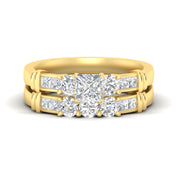
Wedding band compatibility: Princess cuts pair naturally with straight channel-set or pavé bands because the square outline sits flush against a straight shank. Round diamonds work with virtually any band style. Both shapes are highly compatible with standard band designs.
Princess Cut vs. Cushion Cut Diamond Engagement Rings
The cushion cut is the most common alternative buyers consider when choosing between square diamond shapes. Both are square or near-square, both deliver strong brilliance, and both are priced below round diamonds. The differences are meaningful.
Princess cuts have sharp 90-degree corners that require V-prong protection. Cushion cuts have softly rounded corners that are naturally more durable and don't require specialized prong placement. Princess cuts produce tighter, more uniform sparkle through their modified brilliant faceting. Cushion cuts produce broader, warmer flashes of light with more visible fire. Princess cuts read as modern and geometric. Cushion cuts read as romantic and vintage-influenced. For buyers who are undecided between the two, the deciding factor usually comes down to whether they prefer a sharp, structured silhouette or a softer, more rounded one.
Best Settings for Princess Cut Engagement Rings
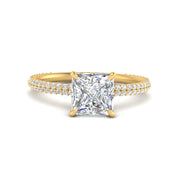
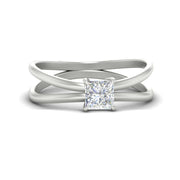
Solitaire Engagement Rings: A four-prong solitaire with V-prongs at each corner is the most classic and practical setting for a princess cut diamond. The V-prongs are specifically designed to cup and protect the sharp corners, which are the most vulnerable part of the stone. A plain, straight band complements the square geometry best, creating a clean, architectural look that puts all visual focus on the center stone.
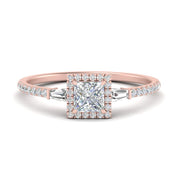
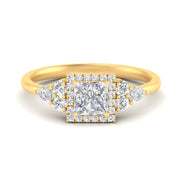
Halo Engagement Rings: A square halo of round or princess cut accent diamonds frames the center stone and amplifies its apparent size significantly. A well-designed square halo on a 1-carat princess cut can visually present as a 1.5-carat stone. The halo also reinforces the square outline, making the princess shape read more clearly at a distance. Round accent diamonds in a square halo setting soften the geometry slightly while maintaining the overall square profile.
Hidden halo Engagement Rings: A hidden halo places accent diamonds beneath the girdle of the center stone, adding brilliance from side angles while preserving a clean solitaire profile from above. This setting is ideal for buyers who want additional sparkle without the visible frame of a traditional halo.
Three-stone Engagement Rings: Flanking a princess cut center stone with two smaller matching princess cuts or tapered baguettes creates a bold, geometric composition with strong symmetry. The three-stone format adds meaningful carat weight and carries the traditional symbolism of past, present, and future. Baguette side stones in particular create a clean, Art Deco-influenced look that pairs exceptionally well with the princess cut's structured geometry.
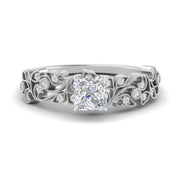
Vintage-inspired: The princess cut's sharp lines and structured faceting translate surprisingly well into vintage-inspired settings with milgrain edges, filigree, and pavé detailing. The contrast between the modern geometry of the princess cut and the ornate detail of a vintage setting creates a distinctive, hybrid aesthetic that's become increasingly popular.
Princess Cut Diamond Durability and Everyday Wear
The four sharp 90-degree corners of a princess cut diamond are the primary durability consideration for everyday wear. Diamond is the hardest natural material, but sharp corners and thin edges concentrate stress and are vulnerable to chipping if struck against a hard surface at the right angle. This is not a reason to avoid the princess cut, but it is a reason to be deliberate about setting design.
V-prongs are the standard and recommended solution. Each V-prong cups over a corner of the diamond, distributing impact force across the metal rather than concentrating it at the diamond's edge. A well-constructed four-prong V-prong setting with quality metalwork provides full corner protection without covering excessive amounts of the diamond's surface. Bezel settings, which wrap a continuous metal border around the entire girdle of the stone, provide maximum protection and a modern, streamlined aesthetic for buyers who want the most secure option available.
With proper V-prong or bezel protection and quality craftsmanship, princess cut engagement rings are entirely suitable for daily wear.
Natural vs. Lab Grown Princess Cut Engagement Rings
Fascinating Diamonds offers princess cut engagement rings in both natural and lab grown diamonds across all carat weights, settings, and metal types. Natural princess cut diamonds are GIA or IGI certified and carry the rarity and provenance associated with mined stones. Lab grown princess cut diamonds are chemically, physically, and optically identical to natural diamonds and typically cost 50 to 70 percent less per carat at equivalent quality grades.
For princess cuts specifically, the value case for lab grown is particularly strong. Because princess cut diamonds already cost less per carat than rounds, the combined savings of choosing a lab grown princess cut at the same budget can be substantial. A buyer spending $3,000 on a natural princess cut at 1 carat can often access a lab grown princess cut at 2 carats or more at the same price point, with equivalent or better color and clarity grades.
Metal Options for Princess Cut Engagement Rings
Platinum and white gold are the most popular metal choices for princess cut rings. The cool, neutral tone creates a clean backdrop that complements the sharp geometric corners of the princess cut and maximizes the perception of the diamond's brightness. White gold is more affordable. Platinum is denser, more durable over time, and doesn't require rhodium replating to maintain its white color.
Yellow gold creates a striking contrast with the sharp, modern geometry of the princess cut. The combination of a warm metal with a structured square diamond produces a bold, contemporary look with strong vintage undertones. Yellow gold princess cut solitaires have seen strong demand growth alongside the broader revival of yellow gold in fine jewelry.
Rose gold softens the angular profile of the princess cut and creates a romantic, modern combination. It works particularly well in halo and pavé settings where the blush metal tone interacts with the sparkle of accent stones to produce a warm, layered aesthetic.
Shop Princess Cut Engagement Rings at Fascinating Diamonds
Every princess cut engagement ring at Fascinating Diamonds is manufactured in the USA and available with full customization across setting style, metal type, carat weight, and diamond origin. Contact our team at +1 (212) 840-1811 for stone-specific guidance on cut quality, proportions, and setting recommendations. Free shipping and easy returns on all orders.
FAQs For Princess Cut Engagement Rings for Women
Are princess cut diamonds sparkly?
Yes. Princess cut diamonds are the sparkliest square diamond shape available. The modified brilliant facet pattern with 50 to 58 facets produces strong white light return and significantly more fire — colored light dispersion — than other square shapes like cushion or Asscher cuts. Princess cuts produce slightly less overall brightness than round brilliants but deliver more visible fire, making them a strong choice for buyers who want intense, dynamic sparkle rather than uniform white light return.
Do princess cut diamonds chip easily?
Princess cut diamonds don't chip easily under normal wear, but the four sharp 90-degree corners are the most vulnerable part of the stone. Diamond is the hardest natural material, but sharp corners concentrate stress and can chip if struck against a hard surface at the wrong angle. The standard solution is V-prongs at each corner, which cup and protect the corner during everyday wear. With proper V-prong or bezel protection and quality setting construction, princess cut engagement rings are fully suitable for daily use.
What is the best ratio for a princess cut diamond?
The ideal length-to-width ratio for a princess cut diamond is between 1.00 and 1.05. A ratio of 1.00 produces a perfect square, which is the most desirable proportion for this shape. Ratios between 1.01 and 1.05 are acceptable and appear square to the naked eye. Ratios above 1.10 look noticeably rectangular and move away from the defining characteristic of the princess cut. Beyond ratio, look for a depth percentage between 65 and 75 percent and a table percentage between 65 and 75 percent for optimal light performance.
Are princess cut engagement rings cheaper than round?
Yes. Princess cut diamonds are typically 15 to 30 percent less expensive per carat than round diamonds at equivalent quality grades. This price difference exists because the square shape retains significantly more rough diamond during cutting, reducing waste and lowering production cost. At a $5,000 budget, a princess cut buyer can typically access a 1.5-carat stone where a round brilliant buyer would be limited to around 1.1 to 1.2 carats at the same quality level.
Are lab grown princess cut engagement rings worth it?
Yes, and the value case is particularly strong for this shape. Princess cut diamonds already cost less per carat than rounds, so the combined savings of choosing a lab grown princess cut can be substantial. A buyer spending $3,000 on a natural 1-carat princess cut can often access a lab grown princess cut at 2 carats or more at the same price point with equivalent color and clarity grades. Lab grown princess cut diamonds are chemically and optically identical to natural diamonds and typically cost 50 to 70 percent less at equivalent quality grades.
What wedding bands pair best with princess cut engagement rings?
Straight channel-set or pavé bands are the most natural pairing for princess cut engagement rings. The square outline of the princess cut sits flush against a straight band, creating a clean, integrated look without any gap. Channel-set bands with princess or baguette cut side stones are particularly compatible because the geometric shapes echo the center stone's angular profile. Curved bands can also be worn but aren't necessary since the princess cut's straight profile doesn't create a gap against a straight shank.