

Radiant Cut Diamond Engagement Rings
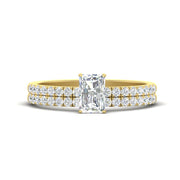
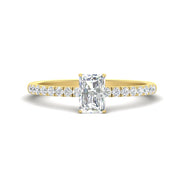
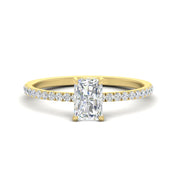
Radiant cut diamond engagement rings combine the geometric structure of a step-cut outline with a modified brilliant facet pattern of 70 facets, producing more fire and light return than any other rectangular diamond shape. The cropped corners eliminate the pointed-tip vulnerability of marquise and pear cuts while maintaining strong finger coverage and a bold, contemporary silhouette.
Explore Our Radiant Cut Engagement Rings Collection




















Real Customer Reviews
Radiant Cut Diamond Engagement Rings: The Complete Guide
The radiant cut is a relatively recent innovation in diamond cutting history. Henry Grossbard developed the shape in 1977 specifically to solve a problem that had existed since step cuts became popular in the Art Deco era: emerald and Asscher cut diamonds looked elegant but sacrificed significant brilliance compared to round brilliants. Grossbard's solution was to apply a full brilliant facet pattern to a rectangular outline with cropped corners, creating a shape that delivered the clean geometric profile of a step cut with the light performance of a brilliant cut. The result was patented as the "radiant cut" and has remained one of the most optically efficient rectangular diamond shapes ever developed.
What makes the radiant cut technically distinctive is its facet count. With 70 facets compared to the round brilliant's 57, the radiant cut has more light-interacting surfaces than almost any other shape. Those additional facets are what produce the radiant's characteristic sparkle — intensely bright, highly fragmented, and visually active in a way that differs noticeably from the broader, softer flashes of a cushion cut or the linear hall-of-mirrors effect of an emerald cut. For buyers who want maximum visual activity from a non-round diamond, the radiant cut is one of the strongest choices available.
Radiant Cut Diamond Proportions: Length-to-Width Ratio
The radiant cut is available in both square and elongated proportions, and the length-to-width ratio determines which version you get. A ratio between 1.00 and 1.05 produces a square radiant cut with a bold, balanced silhouette that reads as a modern alternative to the princess cut. A ratio between 1.10 and 1.35 produces an elongated radiant cut with a rectangular outline that provides stronger finger coverage and a more dramatic presence on the hand.
The elongated radiant cut in the 1.20 to 1.35 range is currently the most popular choice in this shape category. It delivers the finger-lengthening effect of a marquise or oval without the pointed tip vulnerability, and the intense sparkle of the brilliant facet pattern makes the elongated silhouette look visually larger than step-cut rectangles like emerald cuts at the same carat weight.
For buyers choosing between square and elongated, the decision comes down to the same preference that drives cushion vs. princess decisions: a square radiant is bold and geometric, an elongated radiant is dramatic and elongating. Neither is technically superior. The right choice depends entirely on hand proportions and aesthetic preference.
Radiant Cut vs. Cushion Cut Diamond Engagement Rings
The radiant cut and cushion cut are the two most commonly compared rectangular brilliant shapes, and the distinction between them is frequently misunderstood.
The most visible difference is the corner style. Radiant cuts have straight edges and cropped corners that create a clean, angular outline. Cushion cuts have curved sides and softly rounded corners that create a pillow-like, romantic outline. From a distance, a radiant looks structured and geometric. A cushion looks soft and vintage-influenced.
The sparkle character also differs meaningfully. Radiant cuts produce tight, intensely fragmented sparkle because of their 70-facet arrangement. Cushion cuts produce broader, warmer flashes of light with more visible fire. Radiant cuts look icier and more modern. Cushion cuts look warmer and more romantic. Both shapes are priced similarly below round diamonds, both hide inclusions well due to their brilliant faceting, and both work across solitaire, halo, and pavé settings. The decision between them is primarily aesthetic rather than practical.
Radiant Cut vs. Emerald Cut Diamond Engagement Rings
Radiant and emerald cuts share the same rectangular outline with cropped corners, which makes them easy to confuse visually. The difference is entirely in the facet structure and the resulting optical character.
Emerald cuts are step cuts with long, parallel facets arranged in concentric rectangles. They produce a distinctive hall-of-mirrors effect — long, linear flashes of light and dark that create depth rather than sparkle. Emerald cuts are elegant and understated, favored by buyers who want a sophisticated, architectural look rather than maximum brilliance.
Radiant cuts apply a full brilliant facet pattern to the same rectangular outline. They produce intense, fragmented sparkle rather than linear flashes. A radiant cut and an emerald cut of identical carat weight and quality will look completely different in person — the radiant will look noticeably brighter and more visually active. Emerald cuts also show inclusions more readily than radiant cuts because their large open facets don't scatter light. Radiant cuts hide inclusions better, which means you can often buy a lower clarity grade in a radiant cut than you could in an emerald cut at the same visual quality level. For a detailed side-by-side comparison to help you decide, read Radiant vs Emerald Cut: How to Choose the Right Diamond.
Radiant Cut vs. Princess Cut Diamond Engagement Rings
Both shapes occupy the square or near-square brilliant cut category and are priced below round diamonds, but they produce different silhouettes and have different durability profiles.
Princess cuts have sharp 90-degree corners that require V-prong protection. Radiant cuts have cropped corners that don't concentrate stress the same way and are inherently more durable without specialized prong requirements. Princess cuts produce tight, uniform sparkle. Radiant cuts produce more fragmented, visually active sparkle due to their higher facet count. Princess cuts have a sharper, more precisely geometric outline. Radiant cuts have a slightly softer outline due to the cropped corners. For buyers who want a square brilliant cut with less corner vulnerability than a princess, the radiant is the more practical choice.
Best Settings for Radiant Cut Engagement Rings
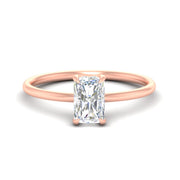
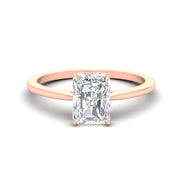
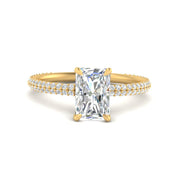
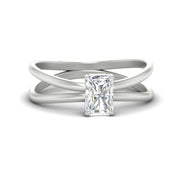
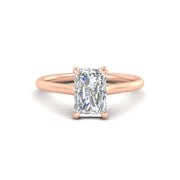
Solitaire: A four-prong solitaire is the most common setting for a radiant cut diamond. Unlike princess cuts, radiant cuts don't require V-prongs because the cropped corners don't have the same sharp-point vulnerability. Standard prongs positioned at the corners provide adequate security. A thin, plain band complements both square and elongated radiant cuts, keeping visual focus on the center stone's intense sparkle.
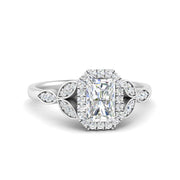
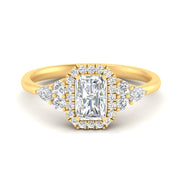
Halo: A rectangular or square halo of round accent diamonds frames the radiant's outline and amplifies its apparent size significantly. A well-proportioned halo on a 1-carat radiant can visually present as a 1.4 to 1.5-carat stone. The halo also reinforces the radiant's geometric outline, making the shape read more clearly from a distance. For elongated radiants, a rectangular halo that follows the stone's proportions creates the most cohesive result.
Hidden halo: A hidden halo places accent diamonds beneath the girdle of the center stone, adding brilliance from side angles while preserving a clean solitaire profile from above. This setting is ideal for buyers who want extra sparkle with a minimalist top-down presentation.
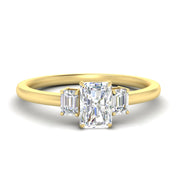
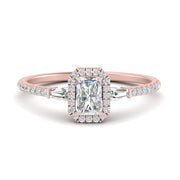
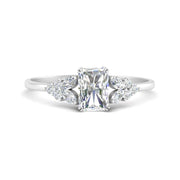
Three-stone: Flanking a radiant center stone with two matching radiant cuts or tapered baguettes creates a bold, geometric composition with strong visual symmetry. Baguette side stones are a particularly natural pairing for radiant cuts because the straight edges of the baguette echo the radiant's cropped-corner outline. The three-stone format adds meaningful carat weight and carries the traditional symbolism of past, present, and future.
East-west: An east-west setting rotates the radiant 90 degrees so its length runs horizontally across the finger. This modern orientation works particularly well with elongated radiant cuts and creates a wide, architectural look that's distinctly contemporary. East-west elongated radiant rings in yellow gold are currently one of the strongest trending styles in the non-traditional engagement ring market.
Radiant Cut Diamond Durability and Everyday Wear
The cropped corners of the radiant cut are its most significant durability advantage over other fancy shapes with pointed tips. Marquise, pear, and heart cuts all have pointed tips that concentrate stress and require V-prong protection. Princess cuts have sharp 90-degree corners that are similarly vulnerable. Radiant cuts have neither. The cropped corners distribute stress more evenly across the stone's perimeter, making the radiant cut one of the most durable fancy shapes for everyday wear.
Standard four-prong settings positioned at the cropped corners provide sufficient security for daily wear. Bezel settings, which wrap a continuous metal border around the entire girdle, provide maximum protection and a clean, modern look for buyers who want the most secure option. With quality craftsmanship and standard prong maintenance, radiant cut engagement rings are entirely suitable for daily use without special durability precautions.
Natural vs. Lab Grown Radiant Cut Engagement Rings
Fascinating Diamonds offers radiant cut engagement rings in both natural and lab grown diamonds across all carat weights, settings, and metal types. Natural radiant cut diamonds are GIA or IGI certified and carry the rarity and provenance associated with mined stones. Lab grown radiant cut diamonds are chemically, physically, and optically identical to natural diamonds and typically cost 50 to 70 percent less per carat at equivalent quality grades.
The radiant cut's ability to hide inclusions well makes lab grown options particularly practical for this shape. Because the brilliant facet pattern scatters light aggressively, inclusions that would be visible in an emerald cut are often invisible in a radiant cut at the same clarity grade. This means you can often select a VS2 or SI1 clarity lab grown radiant cut and achieve eye-clean results, accessing a larger stone or better color grade with the budget saved on clarity.
Metal Options for Radiant Cut Engagement Rings
Platinum and white gold are the most popular choices for radiant cut rings. The cool, neutral tone creates a clean backdrop that maximizes the radiant's intense sparkle and lets the geometric outline read with full clarity. White gold is more affordable. Platinum is denser, more durable over time, and maintains its white color without rhodium replating.
Yellow gold pairs naturally with radiant cut diamonds in the G-J color range. The warm metal tone complements the diamond's fire and creates a bold, contemporary look with strong vintage undertones. Yellow gold radiant solitaires and east-west settings are among the most searched radiant ring styles currently.
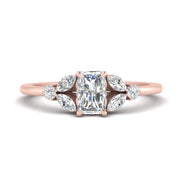
Rose gold creates a warm, romantic combination with radiant cuts. It works particularly well in halo and pavé settings where the blush metal interacts with the sparkle of accent stones to produce a layered, textured brilliance.
Shop Radiant Cut Engagement Rings at Fascinating Diamonds
Every radiant cut engagement ring at Fascinating Diamonds is manufactured in the USA and available with full customization across setting style, metal type, carat weight, and Diamond origin. Contact our team at +1 (212) 840-1811 for stone-specific guidance on proportions, clarity selection, and setting recommendations. Free shipping and easy returns on all orders.
FAQs For Radiant Cut Diamond Engagement Rings
What is a radiant cut diamond?
A radiant cut diamond is a rectangular or square diamond with cropped corners and a modified brilliant facet pattern of 70 facets. It was developed by Henry Grossbard in 1977 to combine the geometric outline of a step cut with the light performance of a brilliant cut. The result is a shape that produces more fire and sparkle than any other rectangular diamond shape, including emerald and Asscher cuts, while maintaining a clean, contemporary silhouette with no pointed-tip vulnerability.
Is a radiant cut the same as a cushion cut?
No. Radiant cuts have straight edges and cropped corners that create an angular, geometric outline. Cushion cuts have curved sides and softly rounded corners that create a pillow-like, romantic outline. Radiant cuts produce tighter, more intensely fragmented sparkle through their 70-facet arrangement. Cushion cuts produce broader, warmer flashes of light with more visible fire. Both are rectangular brilliant cuts priced below round diamonds, but they produce meaningfully different visual results in person.
What is the best ratio for a radiant cut diamond?
For a square radiant cut, the ideal length-to-width ratio is between 1.00 and 1.05. For an elongated radiant cut, the most popular range is 1.20 to 1.35, which provides strong finger coverage and a dramatic rectangular presence without looking overly narrow. Ratios between 1.05 and 1.15 sit in a transitional zone that can look neither clearly square nor clearly elongated, so most buyers prefer staying within one range or the other.
Do radiant cut diamonds hide inclusions well?
Yes. The radiant cut's brilliant facet pattern scatters light aggressively across the stone's surface, making inclusions significantly harder to detect with the naked eye than in step cuts like emerald or Asscher cuts. A VS2 or SI1 clarity radiant cut diamond is typically eye-clean in normal viewing conditions, whereas an emerald cut at the same clarity grade may show visible inclusions. This means you can often select a lower clarity grade in a radiant cut and achieve the same visual quality at a lower price point.
Are radiant cut engagement rings durable?
Yes, and the radiant cut is one of the most durable fancy shapes available. The cropped corners eliminate the sharp pointed-tip vulnerability of marquise, pear, and heart cuts and the sharp 90-degree corner vulnerability of princess cuts. Radiant cuts don't require V-prongs and are less susceptible to chipping under normal wear than most other fancy shapes. Standard four-prong settings provide adequate security for daily wear without specialized prong design.
What wedding bands pair best with radiant cut engagement rings?
Straight pavé or channel-set bands are the most natural pairing for radiant cut engagement rings. The radiant's straight edges and cropped corners sit flush against a straight band without creating a gap, making curved bands unnecessary. Channel-set bands with baguette or princess cut side stones are a particularly strong pairing because the geometric shapes echo the radiant's angular outline. For elongated radiant cuts, a thin straight pavé band in matching metal is the most flattering choice, keeping visual weight on the center stone.