

Blue Sapphire Earrings For Women
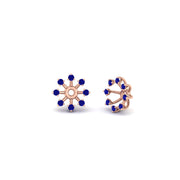
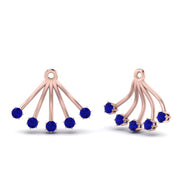
Blue sapphires rank 9 on the Mohs hardness scale, making them one of the most durable colored gemstones for earrings worn daily. Every pair in this collection features certified lab-grown blue sapphires set in 14K or 18K white gold, yellow gold, rose gold, or platinum with your choice of natural or lab-grown diamond accents. Styles include stud earrings, halo earrings, drop earrings, dangle earrings, hoop earrings, teardrop earrings, and lever back designs. All pieces are made in the USA with free shipping and easy financing.
Explore Our Blue Sapphire Earrings For Women Collection










Real Customer Reviews
Why Blue Sapphire Earrings Are a Fine Jewelry Foundation Piece
Earrings are the most consistently worn fine jewelry category. Unlike rings, which require sizing, and necklaces, which depend on neckline, earrings suit every outfit and every occasion without modification. The gemstone in a pair of earrings needs to earn that position through a combination of durability, visual presence, and versatility. Blue sapphire earns all three.
At 9 on the Mohs hardness scale, blue sapphire is second only to diamond in resistance to scratching. Earrings encounter a specific set of daily stresses — contact with hair, fingers, clothing, pillowcases, and other jewelry when stored — and a softer gemstone shows wear from this contact over time. Blue sapphire does not. A pair of blue sapphire studs or hoops worn daily looks the same in five years as it does on the first day, provided basic cleaning is maintained.
The color is equally important. Blue sapphire's vivid, saturated hue reads clearly at the distances at which earrings are observed, primarily from conversational distance of one to two feet and in photographs and video. It performs equally well under fluorescent office lighting, natural daylight, and warm evening light, which is what makes it genuinely suitable for daily wear rather than occasional use. And its symbolism, centuries of association with loyalty, wisdom, and trust, gives it a depth of meaning that supports gifting across a wide range of occasions.
Lab-Grown Blue Sapphires in This Collection
Every blue sapphire in this collection is lab-grown. Lab-grown blue sapphires are genuine sapphires, sharing the same chemical composition as mined blue sapphires (aluminum oxide, Al₂O₃, with iron and titanium as the coloring agents responsible for the blue hue), the same corundum crystal structure, and the same 9 Mohs hardness. The difference is origin.
For earrings specifically, lab-grown blue sapphires offer two practical advantages over natural stones in the same price range. The first is color consistency across the pair. In earrings, two stones appear side by side and are observed simultaneously. Color zoning or tonal variation that might be acceptable in a single pendant stone becomes visible and distracting when the left and right stones differ in hue or saturation. Lab-grown blue sapphires are produced under controlled conditions that deliver consistent color across every stone, ensuring both earrings in a pair read as the same vivid blue.
The second advantage is clarity. Natural blue sapphires almost always contain inclusions. In earring studs and drops where stones are observed at close range in natural light, inclusions visible to the naked eye are apparent. Lab-grown sapphires are typically eye-clean, meaning the blue reads across the full face of the stone without internal interruption.
Blue Sapphire Earring Styles
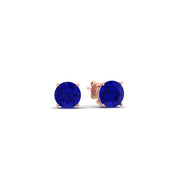
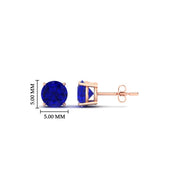
Stud earrings are the most versatile and widely worn format in this collection. A single blue sapphire, set in prongs, a bezel, or a halo mounting, sits flush against the earlobe with no movement. Round blue sapphire studs in prong settings are the most classic configuration. Carat weight options range from 1.00 ct to 10.00 ct per pair, allowing buyers to select a size that suits their preference for understated daily wear or more visible presence. Bezel-set stud designs enclose the sapphire in a continuous metal rim, providing maximum protection and a clean, modern outline. Halo stud designs surround the blue sapphire with a ring of diamonds, amplifying the stone's apparent size and adding brilliance at the perimeter.
Halo earrings expand the stud format by adding a diamond surround that creates a frame of brilliance around the blue sapphire center. This design makes the earring's total face size significantly larger than the center stone alone and creates the most visually dramatic of the sitting-flat earring formats. The contrast between the deep blue center and the white diamond halo is one of the most recognizable combinations in fine earring design.
Drop earrings suspend the blue sapphire below the earlobe on a short stem or chain, allowing slight movement. Drop earrings catch light differently as the wearer moves, which makes the blue sapphire's color appear to shift and dance in ways that a stationary stud cannot. Round, oval, and pear-cut blue sapphires are the most common shapes in drop configurations. Diamond accents at the post or along the drop chain add brilliance above the sapphire center.
Dangle earrings extend further below the earlobe than drop styles, with more pronounced movement. These designs are the most statement-forward in the collection and suit formal occasions, evening wear, and any context where the wearer wants the earrings to be the primary visual statement of the look. Blue sapphire dangles often incorporate multiple stones or graduated elements, with the sapphire as the terminal stone or as accents along a diamond-set drop.
Hoop earrings set blue sapphires along the visible front face of a curved or circular metal hoop. Sapphire hoops combine the continuous, everyday wearability of the hoop format with the color presence of the stone. Channel-set and pave-set blue sapphire hoops are the most common configurations. These designs work particularly well for buyers who want sapphire color in a format that reads as contemporary and casual rather than formal.
Teardrop earrings use a pear-shaped blue sapphire or a pear-shaped overall composition to create an elongated form that visually lengthens the neck and frame of the face. The teardrop format is one of the most flattering earring shapes across face types. Pear-cut blue sapphires in teardrop settings with diamond halos or diamond posts are a consistently popular combination.
Lever back earrings use a hinged clasp at the back that closes securely over the earlobe post, providing more secure fastening than standard butterfly backs. This fastening style is particularly practical for longer drop and dangle designs where the earring weight increases the risk of conventional post backs working loose over time. Lever back blue sapphire earrings suit buyers who want the movement and drama of a longer earring with confidence in secure daily wear.
How Blue Sapphire Color Interacts With Earring Settings
The setting and metal choices in a blue sapphire earring change how the stone's color reads on the ear. Understanding these relationships helps in selecting a design that performs at its best.
Prong settings allow maximum light to reach the stone from all directions, which optimizes the sapphire's color display. More light entry means more vivid blue. Prong studs are the best format for showcasing the stone's color quality.
Bezel settings enclose the girdle in a continuous metal rim, which slightly restricts side light entry. The bezel creates a clean, defined outline around the stone and emphasizes the sapphire's silhouette. The reduced light entry can make the color appear slightly deeper than in a prong setting of the same stone.
Halo settings place diamonds at the perimeter of the sapphire. The diamonds' white brilliance creates a contrast that makes the blue center appear more intensely saturated. This is an optical effect: the brain reads the blue as more vivid when it is surrounded by a bright neutral border. Halo settings deliver more visual impact than equivalent solitaire settings with the same center stone.
Metal Pairings for Blue Sapphire Earrings
White gold and platinum are the most widely chosen metals for blue sapphire earrings. Both provide a cool, neutral background that lets the sapphire's blue read at full intensity without warmth interaction from the metal. White gold requires periodic rhodium plating to maintain its white appearance. Platinum is more durable long-term, fully hypoallergenic, and needs no replating. For earrings worn daily, platinum is the lower-maintenance choice.
Yellow gold creates warm contrast with blue sapphire. The warm metal tone against cool blue has centuries of historical precedent in fine jewelry and reads as rich and traditional. Yellow gold blue sapphire earrings suit buyers who prefer warmth in their jewelry aesthetic or who are building a yellow gold collection.
Rose gold creates softer, warmer contrast with blue sapphire than yellow gold. The pinkish-rose tone against deep blue has a contemporary, romantic quality. Rose gold blue sapphire earrings are a popular choice for buyers who want warmth without the traditional associations of yellow gold.
All pieces are available in 14K and 18K versions of each metal. 14K gold is harder and more scratch-resistant, which matters more for earrings than for rings given the specific contact stresses earrings experience. 18K gold carries higher pure gold content and deeper color tone.
Choosing the Right Blue Sapphire Earring Size
Earring size selection involves the relationship between stone carat weight, the physical dimensions that weight represents, and the wearer's frame and personal preference.
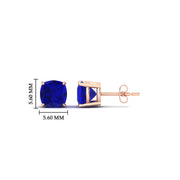
Blue sapphires have a slightly higher specific gravity than diamonds (approximately 4.0 versus 3.52), so a 1-carat blue sapphire in a round cut measures approximately 6.0 mm in diameter, slightly smaller than a 1-carat diamond at approximately 6.5 mm. For earring selection, millimeter face dimensions are more useful than carat weight for understanding how a stone will actually appear on the ear.
For everyday wear, round blue sapphire studs in the 1.00 to 2.00 ct total weight range (approximately 5–6 mm per stone) are the most versatile choice. They are visible at conversational distance without being ostentatious in professional or casual contexts.
For occasions-forward wear and gifting, 3.00 to 5.00 ct total weight configurations offer noticeably more visual presence. These sizes suit buyers who want the earrings to read as a statement even in a simple stud format.
For maximum visual impact and formal or evening wear, configurations above 5.00 ct total weight deliver strong color presence across a room and suit the dangle and drop formats particularly well.
Blue Sapphire Earrings as Gifts
Blue sapphire earrings are one of the most consistently chosen fine jewelry gifts, combining visual impact, symbolism, and versatility that suits a wide range of recipients and occasions.
For September birthdays, blue sapphire is the traditional birthstone. A pair of blue sapphire studs or drops is the most personally specific fine jewelry gift available for someone born in September.
For anniversaries, blue sapphire's historical association with loyalty and enduring love makes it one of the most symbolically appropriate earring gifts for relationship milestones. Blue sapphire is the traditional 45th anniversary gemstone, though its symbolism suits any anniversary.
For Mother's Day, blue sapphire earrings are among the most requested fine jewelry gifts. Stud designs are the most practical and universally wearable format for everyday use, while halo or drop designs suit recipients who prefer more visible pieces.
For milestone celebrations including graduations, promotions, and personal achievements, blue sapphire's historical association with wisdom makes it a particularly fitting choice. A well-chosen pair of blue sapphire earrings communicates attention and intention that a generic diamond alternative cannot.
For bridal jewelry, blue sapphire earrings are one of the most popular choices for the "something blue" tradition. Their formal presence suits wedding day wear, and their durability means they become a long-term wardrobe piece rather than a single-occasion item.
Blue Sapphire Earring Care
Lab-grown blue sapphires are low-maintenance gemstones. Clean with warm water, mild dish soap, and a soft-bristle brush. Scrub gently around each stone and setting, rinse thoroughly, and dry with a lint-free cloth. This removes the skin oils, hair product, and cosmetic residue that accumulate with daily earring wear and progressively dull the stone's color.
Ultrasonic and steam cleaning are both safe for lab-grown blue sapphires and are particularly useful for reaching into halo settings where a brush cannot access between stones.
Apply hairspray, perfume, and cosmetics before putting on the earrings. Products applied after can build up in settings and affect both the stone and the metal finish.
Store blue sapphire earrings separately from other jewelry to prevent harder stones from scratching softer metal surfaces. A soft earring holder or individual compartmentalized jewelry box keeps pairs organized and protected.
Check lever back clasps and butterfly back fittings periodically to ensure they remain secure. Lever backs in particular can loosen with extended wear and should be checked by a jeweler if resistance decreases.
FAQs For Blue Sapphire Earrings For Women
1. Are blue sapphire earrings suitable for everyday wear?
Yes. Blue sapphires rate 9 on the Mohs hardness scale, second only to diamond, and resist scratching from all everyday contact. They are among the most practical colored gemstones for earrings worn continuously.
2. Are the blue sapphires in this collection natural or lab-grown?
All blue sapphires are lab-grown. They are genuine sapphires, chemically and physically identical to mined blue sapphires, with consistent color across both stones in a pair and higher clarity than most natural sapphires in the same price range.
3. What does a blue sapphire earring symbolize?
Blue sapphires have historically symbolized loyalty, wisdom, and trust, making them a meaningful gift for relationships and milestones where those qualities are being celebrated or recognized.
4. What metal works best with blue sapphire earrings?
White gold and platinum are the most popular choices, providing a cool neutral background that lets the sapphire's blue read at full intensity. Yellow gold creates warm traditional contrast. Rose gold offers a softer contemporary pairing. All metals are available in this collection.
5. How do I choose the right size blue sapphire earring?
For everyday wear, 1.00 to 2.00 ct total weight in stud format is the most versatile. For more visible statement presence, 3.00 to 5.00 ct suits occasions-forward wear. Use millimeter dimensions rather than carat weight alone to understand how a stone will appear on the ear, as sapphires measure slightly smaller face-up than diamonds of the same carat weight.
6. Can I wear blue sapphire earrings in the shower or while swimming?
Warm water will not damage the sapphire. However, chlorinated pool water and soap can affect metal settings and chain clasps over time. It is best practice to remove fine jewelry before swimming and showering to extend the life of the setting and metal finish.
7. Are blue sapphire earrings a good September birthday gift?
Yes. Blue sapphire is the September birthstone, making it the most personally significant gemstone gift for anyone born in September. Stud earrings are the most universally wearable format and suit recipients who wear earrings daily.
8. What blue sapphire earring styles are available at Fascinating Diamonds?
This collection includes blue sapphire stud earrings, halo earrings, drop earrings, dangle earrings, hoop earrings, teardrop earrings, and lever back earrings across multiple carat weight options and all metal types.
9. Do blue sapphire earrings pair well with a blue sapphire necklace or ring?
Yes. Blue sapphire earrings pair naturally with a blue sapphire pendant necklace for a coordinated color story. They also work well alongside a blue sapphire engagement ring or wedding band. Pairing with colorless diamond pieces in between keeps the look balanced rather than monochromatic.