

Modern Signet Rings for Women
A signet ring is one of the oldest jewelry formats in history — and one of the most current. Every ring in this collection features the signet's signature flat-face silhouette in 14k and 18k gold, set with diamonds or gemstones. Wear it on the pinky as a personal statement, or stack it as the most characterful ring in your collection.
Explore Modern Women’s Signet Ring Collection

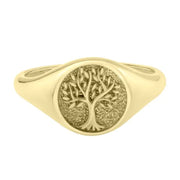

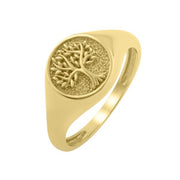

14K Yellow Gold Tree Of Life Signet Ring








Real Customer Reviews
What Is a Signet Ring?
A signet ring is a ring featuring a flat or slightly domed face — called the bezel or table — traditionally engraved with a family crest, initials, or personal motif. The word signet derives from the Latin signum, meaning sign or seal. In ancient Egypt, Mesopotamia, Greece, and Rome, signet rings served a practical function: pressed into hot wax, they authenticated documents and identified their sender with the same authority a signature carries today.
That functional origin is what gives the signet ring its character. Unlike decorative jewelry designed purely for aesthetics, the signet ring was a tool — a piece of authority worn on the body. That history is embedded in its flat-face design, which hasn't changed in its essential form across thousands of years of continuous wear.
Today, signet rings for women have moved decisively from heritage accessory to contemporary fine jewelry staple. The flat face that once held a family crest now holds a diamond, a gemstone, or a custom engraving — the format is ancient, the interpretation is entirely modern.
The History of Signet Rings
Signet rings trace their origins to ancient Egypt, where pharaohs and religious leaders used rings engraved with personal seals to authenticate decrees and documents. The ring was pressed into melted wax, leaving behind an impression that served as an official signature. In ancient Rome, the right to wear a gold signet ring was a privilege of the senatorial class — a visible mark of rank and authority.
Through the medieval period, signet rings became central to European aristocracy. Kings, nobles, and bishops used signet rings to seal correspondence and authorize documents. The engraving on the face — a family crest, coat of arms, or personal emblem — was as unique as a fingerprint and carried legal weight. Destroying a man's signet ring was a formal act of stripping his authority.
The tradition passed down through families as heirlooms, with rings given to sons on coming-of-age and worn on the pinky finger throughout life. The pinky placement was practical: the non-dominant small finger was least likely to contact surfaces, protecting the engraved face from wear.
In the Victorian era, signet rings became popular across social classes — not just nobility — and women began wearing them alongside men. The 20th century saw signet rings enter mainstream fashion, worn as status symbols, personal statements, and fashion accessories by everyone from royalty to rock stars.
The contemporary signet ring revival has been driven by a broader cultural appetite for jewelry with substance and history. For women, the signet ring represents a deliberate choice — a piece with centuries of authority behind it, worn with the confidence that comes from knowing exactly what you're wearing and why.
Signet Ring Styles at Fascinating Diamonds
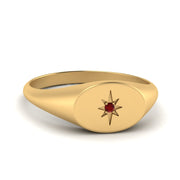
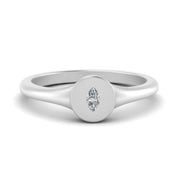
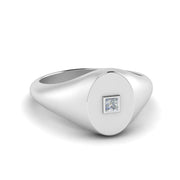
Diamond Signet Ring The most popular modern signet ring configuration. A diamond — round brilliant, oval, marquise, or princess cut — is set into the flat face of the signet, replacing the traditional engraved crest with a stone. The result is a ring that carries the signet's architectural silhouette with the brilliance of a diamond at its center. Diamond signet rings in yellow gold are the most sought-after combination — the warm metal and the bright stone create a striking contrast that reads as both classic and contemporary.
Gemstone Signet Ring Colored gemstones set into the signet face bring a layer of personal meaning through color and stone symbolism. Sapphire signet rings reference loyalty and wisdom. Ruby signet rings carry love and passion. Emerald signet rings represent renewal and growth. Birthstone signet rings are the most personally specific choice — a stone selected for its direct connection to the wearer's identity rather than general aesthetics.
Engraved Signet Ring The most -format. The flat metal face is engraved with initials, a monogram, a zodiac symbol, a family crest, a personal motif, or a meaningful date. Engraved signet rings in yellow gold are the most historically authentic style — and one of the most personal pieces of fine jewelry a woman can own or give as a gift. The engraving transforms a beautiful ring into an irreplaceable one.
Plain Face Signet Ring A clean, unengravd signet with a flat polished or brushed metal face and no stone setting. The plain face signet is the most architectural and minimal expression of the style — the signet silhouette alone is sufficient to make a strong design statement. Plain face signets in yellow or rose gold are the most common, often worn as statement pinky rings or stacked with other fine jewelry.
Oval Signet Ring The oval — also called the Oxford oval — is the most traditional signet ring face shape. Its rounded rectangular outline has been the dominant signet format across centuries of European fine jewelry and remains the most widely recognized shape in the category. Oval signet rings in 14k or 18k yellow gold are the closest contemporary expression of the historical form.
Square and Cushion Signet Ring Square and cushion-shaped signet faces offer a bolder, more architectural look than the traditional oval. Square faces create a stronger graphic presence on the finger — particularly popular for diamond signet rings where the stone's shape echoes the face geometry. Cushion-shaped faces soften the square's angularity with rounded corners, creating a shape that reads as more feminine than a hard-edged square.
Marquise and Elongated Signet Ring A marquise or elongated oval signet face — wider in the center and tapered at both ends — creates a distinctive, fashion-forward look that reads as modern rather than traditional. Marquise signet rings in rose gold with marquise-cut diamonds are one of the most contemporary configurations in the collection.
Which Finger Does a Signet Ring Go On?
Traditionally, signet rings are worn on the pinky finger of the non-dominant hand. This placement has a practical origin — the pinky is the least active finger, minimizing contact between the ring and surfaces and protecting the engraved face from wear. The non-dominant hand was chosen to keep the ring accessible for sealing wax without interfering with writing or primary hand tasks.
Today the pinky placement has taken on its own contemporary meaning. A signet ring worn on the pinky reads as deliberate and fashion-forward — the non-conventional placement signals intention rather than tradition. Many women who wear signet rings on the pinky describe the placement as the detail that makes every outfit feel considered.
There are no fixed rules. Signet rings are also worn on the index finger for a bolder, more assertive look — the index finger carries a strong visual presence and suits larger signet faces particularly well. The middle finger is a less common but equally valid placement for signet rings that suit a more centered, balanced look.
Stacking a signet ring with other rings on the same finger — a thin pavé band below a signet, or a plain band above — creates a layered look that integrates the signet into a broader jewelry stack rather than wearing it as a standalone piece.
How to Style a Signet Ring
As a standalone statement: A single diamond or gemstone signet ring on the pinky, worn with otherwise minimal jewelry, creates a focused, intentional look. The signet's architectural face draws the eye and reads as the deliberate centerpiece of a restrained styling choice.
Stacked on the pinky: Two or three slim rings on the pinky — a signet ring as the anchor, flanked by thin plain or pavé bands — creates a fashion-forward stack that looks deliberately curated. The pinky is the most naturally stackable finger for signet ring combinations.
Mixed with engagement and wedding rings: A signet ring worn on the index or middle finger alongside an engagement ring on the ring finger creates an editorial, multi-finger look. The contrast between the signet's flat architectural face and the engagement ring's vertical center stone creates visual tension that reads as sophisticated.
With watches and bracelets: Signet rings pair naturally with watch and bracelet stacks on the same wrist or the opposite hand. A yellow gold signet ring on the right hand alongside a watch on the left creates a balanced, considered jewelry approach.
Metals for Signet Rings
14k Yellow Gold: The most popular metal for signet rings and the most historically appropriate. Its warmth and durability make it the strongest choice for daily-wear signets. 14k gold is harder than 18k, making it more resistant to the surface wear that signet rings — worn on the active pinky finger — experience.
18k Yellow Gold: Richer and deeper in color than 14k, 18k yellow gold suits buyers who want maximum warmth and the highest gold content in a wearable daily-wear ring. Best for signets worn with intention on special occasions rather than every-day all-day.
Rose Gold: The most contemporary metal choice for signet rings. Rose gold's warm pink tone creates a distinctly modern, feminine aesthetic that updates the signet's traditional character without losing its architectural quality.
White Gold: The coolest, most neutral metal choice. White gold signet rings with diamond settings create maximum contrast between metal and stone. The contemporary, minimal aesthetic of a white gold diamond signet suits buyers whose jewelry vocabulary runs toward clean, architectural pieces.
Platinum: The most durable and premium metal. Naturally white with no rhodium plating required, platinum suits high-value signet rings where long-term durability and setting security are priorities.
Signet Rings as Gifts
Signet rings are one of the most giftable pieces of fine jewelry — personal enough to feel significant, versatile enough to suit almost any recipient, and meaningful enough to be kept for life. Common gifting occasions include:
- Coming-of-age milestones — 18th and 21st birthdays, graduations
- Mother's Day — particularly with children's initials or birthstones engraved or set
- Anniversaries — a monogram or date engraved inside or on the face
- Self-purchase — a personal milestone, career achievement, or simply the decision to own a piece of genuine jewelry history
- Friendship and partnership — matching signet rings as a symbol of a significant relationship
Engraving — initials, a date, a zodiac sign, or a personal motif — transforms any signet ring from a beautiful piece of jewelry into an irreplaceable one. Custom engraving is available on all metal-face signet rings at Fascinating Diamonds.
Natural vs Lab-Grown Diamonds in Signet Rings
Diamond signet rings at Fascinating Diamonds are available with both natural and lab-grown center stones. Lab-grown diamonds are chemically and optically identical to natural diamonds — the same hardness, the same brilliance, the same GIA or IGI certification — at 50–70% less cost per carat.
For signet rings, where the center stone is typically under 0.50ct, the visual difference between natural and lab-grown is imperceptible. The practical difference is budget: a lab-grown diamond allows you to go higher in color grade or choose a larger stone within the same price point.
FAQs For Modern Signet Rings for Women
1. What is a signet ring?
A signet ring is a ring with a flat or slightly domed face — called the table or bezel — traditionally engraved with a personal seal, family crest, or initials. The word signet comes from the Latin signum, meaning sign. Historically used to authenticate documents by pressing into wax, signet rings today are worn as personal statement pieces, engraved with initials, set with diamonds or gemstones, or left as plain architectural metal faces.
2. Which finger should a woman wear a signet ring on?
The pinky finger of the non-dominant hand is the traditional and most popular placement. It's a deliberate, fashion-forward choice that reads as intentional rather than conventional. The index finger is a bolder alternative for larger signet faces. There are no fixed rules — the right finger is whichever placement feels most comfortable and expressive for the wearer.
3. What is the best shape for a women's signet ring?
The oval — also called the Oxford oval — is the most traditional and widely recognized signet shape, suited to engraving and stone settings. Square and cushion shapes create a bolder, more architectural look. Marquise and elongated oval faces are the most contemporary configurations. The right shape depends on personal aesthetic preference and whether the ring will be engraved, stone-set, or left plain.
4. Can signet rings be engraved?
Yes. Engraving is one of the most popular customizations for signet rings. Common options include initials, a monogram, a family crest, a zodiac sign, a meaningful date, or a personal motif. Engraving transforms a signet ring from a beautiful piece of jewelry into an irreplaceable personal artifact. Custom engraving is available on all metal-face signet rings at Fascinating Diamonds.
5. What metal is best for a women's signet ring?
14k yellow gold is the most popular and practical choice — warm, durable, and historically appropriate for the signet format. Rose gold offers a contemporary, feminine aesthetic. White gold creates the strongest contrast for diamond signet rings. Platinum is the most durable option for high-value pieces intended for long-term daily wear.
6. Are signet rings in style for women?
Yes. Women's signet rings have experienced a strong contemporary resurgence driven by the broader trend toward jewelry with history, substance, and personal meaning. The signet ring's architectural silhouette, long heritage, and personalization potential make it one of the most culturally relevant fine jewelry pieces available today. Fashion influencers, celebrities, and fine jewelry buyers across all age groups wear signet rings as personal statement pieces.
7. How do you wear a signet ring with other rings?
Signet rings stack naturally with slim pavé and plain metal bands on the same finger. On the pinky, a two or three-ring stack with the signet as the anchor creates a fashion-forward look. A signet ring worn on the index or middle finger alongside an engagement ring on the ring finger creates a multi-finger editorial look. Keep flanking bands slim to maintain the signet face as the visual focal point.
8. What is the difference between a signet ring and a regular ring?
The defining characteristic of a signet ring is its flat or slightly domed face — the table — which distinguishes it from rings with raised stone settings, solitaire mounts, or band-only designs. The flat face is the signet's historical functional element (used for wax sealing) and its contemporary design signature. Any ring with a flat-face format qualifies as a signet ring, regardless of whether it is engraved or stone-set.
9. Are diamond signet rings suitable for everyday wear?
Yes. Diamond signet rings in 14k gold are well-suited for daily wear. The signet format's flat face sits lower on the finger than a solitaire setting, reducing the risk of snagging. Bezel and flush-set diamonds within the signet face are the most durable configurations for active daily use. Prong-set diamonds on a signet face require periodic professional inspection to ensure setting security.