

Black Diamond Engagement Rings for Women
Black diamonds are genuine diamonds, rated 10 on the Mohs hardness scale and identical in hardness and durability to colorless diamonds. Their color comes from graphite inclusions distributed throughout the crystal structure, giving them a distinctive opaque, high-contrast appearance that no other gemstone replicates. Every ring in this collection features a certified lab-grown black diamond set in 14K or 18K white gold, yellow gold, rose gold, or platinum with your choice of natural or lab-grown diamond accents. Styles span halo, solitaire, three-stone, bezel, split shank, princess cut, and vintage designs. Prices start at $1,112. All rings are made in the USA with free shipping and easy financing.
Explore Our Black Diamond Engagement Rings Collection
















Real Customer Reviews
What Black Diamonds Are and Why They Read Differently
Black diamonds occupy a category of their own in fine jewelry. They are not a separate gemstone. They are not treated with colored stones in the way that blue topaz or amethyst are enhanced. Black diamonds are diamonds, composed of carbon in the same cubic crystal structure as colorless diamonds, and they share the same 10 Mohs hardness rating. What sets them apart is their internal structure.
Most black diamonds get their color from a high concentration of graphite inclusions distributed densely throughout the crystal. These inclusions absorb light rather than reflecting it, giving the stone its characteristic opaque, deep black appearance. Unlike colorless diamonds, which transmit and refract light to produce brilliance, black diamonds absorb light and produce a surface luster, a reflective sheen from the polished facets rather than internal sparkle. The effect is graphic, bold, and visually unlike anything else in the engagement ring market.
Natural black diamonds are found primarily in Brazil and the Central African Republic. They are among the rarest diamond varieties mined, in part because their high inclusion content makes cutting and polishing significantly more challenging than working with gem-quality colorless diamonds. Lab-grown black diamonds replicate this structure in controlled conditions, producing stones with consistent color and the same 10 Mohs hardness at lower price points.
Why Black Diamond Engagement Rings Appeal to Modern Buyers
The appeal of black diamond engagement rings is rooted in visual contrast and intentionality. Where colorless diamonds communicate light, brilliance, and tradition, black diamonds communicate depth, edge, and deliberate individuality. These are not interchangeable aesthetics. Choosing a black diamond engagement ring is a specific statement, one that has driven consistent demand among buyers who want a ring that reflects their personal identity rather than a default convention.
Black diamond engagement rings gained mainstream visibility in the early 2000s when several high-profile engagements featured them, and they have maintained a steady presence in fine jewelry since. Their staying power is partly aesthetic and partly cultural. In an era where couples increasingly personalize every aspect of their wedding, from the venue to the vows, an unconventional engagement ring is a natural extension of that impulse.
Black diamonds also pair exceptionally well with metals and design elements that look flat or lost against colorless diamonds. Black against white gold or platinum produces maximum contrast. Black against rose gold produces a warm, editorial pairing that has become one of the most recognized aesthetics in contemporary jewelry. Yellow gold and black diamond create a graphic, art deco-adjacent look that has strong historical precedent.
Why Fascinating Diamonds Offers Lab-Grown Black Diamonds
Lab-grown black diamonds are genuine diamonds. They share the same carbon crystal structure, the same 10 Mohs hardness, and the same opaque, graphite-inclusion-driven color as naturally formed black diamonds. The only difference is origin.
Lab-grown black diamonds are produced using high-pressure, high-temperature (HPHT) or chemical vapor deposition (CVD) processes that replicate the conditions under which natural black diamonds form. The result is a stone that is chemically and physically identical to a mined black diamond, with one consistent advantage: more uniform color distribution. Natural black diamonds can show subtle tonal variation across the face-up surface. Lab-grown stones achieve consistent, deep black color with greater predictability.
Offering lab-grown black diamonds exclusively allows Fascinating Diamonds to deliver certified stones with reliable color quality, ethical sourcing, and accessible pricing without compromising on any of the physical properties that make black diamonds compelling for engagement rings.
Black Diamond Quality: What Matters When Evaluating a Stone
Black diamonds are not graded on the same 4C scale used for colorless diamonds. The GIA and other major laboratories do not assign color, clarity, or cut grades to black diamonds in the same way they do to colorless stones, because the standard grading criteria do not apply to opaque, heavily included material.
What matters for black diamond quality in an engagement ring context is the following.
Color consistency. The most desirable black diamonds show consistent, uniform color across the entire face-up surface, without patchy gray or brownish areas. Lab-grown black diamonds typically achieve higher color consistency than natural stones. Natural black diamonds can show subtle tonal variation, which some buyers consider desirable as evidence of natural origin.
Surface quality. Because black diamonds are opaque, surface polish is more important than internal clarity. The stone's visual impact comes from its surface luster. High-quality cutting and polishing produce a mirror-like reflective surface. Lower-quality stones may show pitting, dullness, or uneven surface texture.
Cut and shape. Black diamonds are available in the same cuts as colorless diamonds: round, oval, cushion, princess, emerald, marquise, and pear. Round and oval cuts are most common in engagement ring applications. The emerald cut is particularly effective for black diamonds, as its large flat table maximizes the stone's surface area and reflective quality.
Treatment status. Some commercially available black diamonds are colorless or near-colorless diamonds that have been irradiated or heat-treated to produce a black color. These are real diamonds but are structurally different from naturally black or HPHT-grown black diamonds. Treatment status should be disclosed. All diamonds at Fascinating Diamonds are certified with treatment status disclosed at purchase.
Best Settings for Black Diamond Engagement Rings
Setting choice for black diamonds is partly aesthetic and partly practical. Black diamonds are as hard as colorless diamonds, so structural setting requirements are identical. The aesthetic considerations, however, are unique to the stone's opaque, high-contrast character.
Halo settings are among the most visually effective formats for black diamonds. A ring of white diamond accents around a black center creates maximum contrast in both directions, the black stone intensifying the brilliance of the white diamonds and vice versa. The oval halo milgrain and oval halo cathedral designs in this collection demonstrate how this contrast operates at scale. Hidden halo designs place the diamond ring below the girdle, adding brilliance from the sides while keeping the top face of the black diamond clean and unframed.
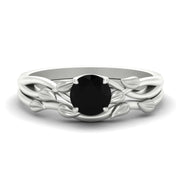
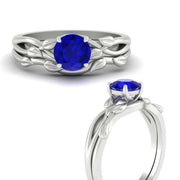
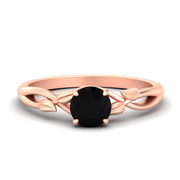
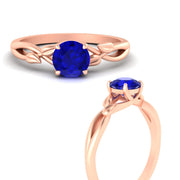
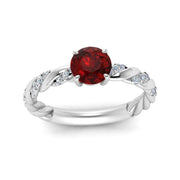
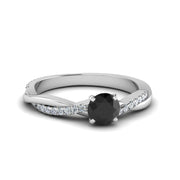
Solitaire settings direct attention entirely to the stone's surface and color. Vine, leaf, and petite twisted band designs give solitaire black diamond rings organic character that contrasts interestingly with the stone's bold, graphic quality. The rope solitaire design amplifies the graphic tension between textured band and smooth black surface.
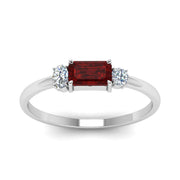
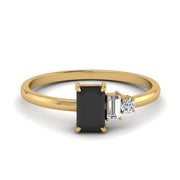
Three-stone settings pair a black diamond center with white diamond flankers, or offer configurations where all three stones are black. The alternate three-stone design using emerald-cut stones creates a linear, architectural reading that suits the black diamond's non-traditional character. The three-stone oval bezel design protects all three stones while maintaining a sleek, contemporary profile.
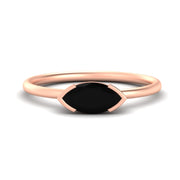
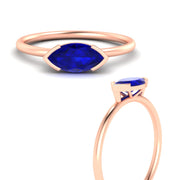
Bezel settings enclose the black diamond in a continuous metal rim. This is the cleanest framing option for black diamonds, as the metal border emphasizes the stone's outline and graphic presence without competing for visual attention. The unusual bezel and half bezel east-west designs in this collection work particularly well with the stone's bold aesthetic.
Princess cut and emerald cut designs suit black diamonds naturally. The princess cut infinity twist and split shank emerald cut designs in this collection leverage the sharp geometry of these cuts against the stone's opaque surface, creating an angular, architectural quality that is very different from the soft, curved reading of round or oval black diamonds.
Vintage and antique-inspired settings create unexpected counterpoint with black diamonds. The leaf cushion vintage design places a black diamond in ornate, nature-inspired metalwork, a combination of the unconventional stone with a traditional setting format that reads as deeply personal and considered.
Metal Pairings for Black Diamond Engagement Rings
White gold and platinum are the most graphic pairing for black diamonds. The contrast between the cool, bright metal and the opaque black stone is maximum and immediate. This combination suits buyers who want the ring's impact to come from stark contrast rather than warmth or tonal harmony. Platinum is the more durable long-term choice, as it does not require rhodium plating and is hypoallergenic.
Rose gold is the most popular metal choice for black diamond engagement rings in the current market. The warm pinkish-rose tone against deep black creates an editorial, fashion-forward contrast that reads as both bold and romantic. Several designs in this collection, including the oval halo milgrain, crossover, and hidden halo rings, were built with rose gold as the primary pairing.
Yellow gold creates the highest tonal warmth against black diamond and has strong art deco precedent. Black and gold is one of the most enduring two-tone combinations in design history, and yellow gold black diamond rings carry that aesthetic weight directly. The leaf cushion vintage and unconventional gemstone ring designs translate particularly well in yellow gold.
All rings are available in 14K and 18K versions of each metal. 14K gold is harder and more scratch-resistant. 18K gold contains a higher pure gold content and richer color tone.
Black Diamond Engagement Ring Care
Black diamonds require the same care as colorless diamonds, with one additional consideration related to their inclusion-heavy structure.
Clean black diamond rings with warm water, mild dish soap, and a soft-bristle brush. Scrub gently around the setting and stone, rinse thoroughly, and dry with a lint-free cloth. This removes the skin oils, lotion residue, and product buildup that accumulate with daily wear and reduce surface luster.
Ultrasonic cleaning is generally not recommended for black diamonds. The high concentration of graphite inclusions that give black diamonds their color also makes them more susceptible to fracturing under ultrasonic vibrations than colorless diamonds. Steam cleaning is similarly inadvisable for the same reason. Manual cleaning with a soft brush is the safe and effective method.
Remove black diamond rings before activities involving direct impact. Although black diamonds share the Mohs 10 hardness of colorless diamonds, their heavy inclusion content makes them more brittle along fracture planes than cleaner stones. Avoid exposing the ring to sudden thermal shock or strong chemicals.
Store black diamond rings separately from other jewelry to prevent metal surfaces from being abraded by the stone's hardness.
Annual professional inspection is recommended to verify prong tightness and setting security.
FAQs For Black Diamond Engagement Rings for Women
1. Are black diamonds real diamonds?
Yes. Black diamonds are genuine diamonds composed of carbon in the same cubic crystal structure as colorless diamonds. They share the same 10 Mohs hardness and are distinguished from colorless diamonds only by their graphite inclusion content, which gives them their opaque black color.
2. Are black diamond engagement rings durable for everyday wear?
Yes. Black diamonds rate 10 on the Mohs hardness scale, the highest possible rating, and resist scratching from any everyday contact. They are more brittle than clean colorless diamonds due to their heavy inclusion content, but with appropriate setting choice and reasonable care, they are fully suitable for daily wear.
3. What does a black diamond engagement ring symbolize?
Black diamonds are associated with strength, resilience, mystery, and individuality. They carry no single universal cultural symbolism in the way that colored gemstones do, but their unconventional appearance consistently reads as a deliberate, confident choice that reflects the wearer's personal identity.
4. Are black diamonds graded the same way as colorless diamonds?
No. Standard GIA 4C grading (color, clarity, cut, carat) does not apply to black diamonds in the same way as colorless stones because they are opaque. Quality evaluation for black diamonds focuses on color consistency, surface polish quality, and cut precision. Treatment status is separately disclosed.
5. What is the difference between natural and lab-grown black diamonds?
Both are genuine diamonds. Natural black diamonds form over billions of years through geological processes. Lab-grown black diamonds are created in controlled conditions to replicate the same structure. Lab-grown stones offer more consistent color and cost less. Natural stones carry provenance value for buyers for whom origin matters.
6. Can I use an ultrasonic cleaner on my black diamond ring?
No. Ultrasonic cleaning is not recommended for black diamonds. The graphite inclusions that create the black color make the stone more susceptible to fracturing under vibration than colorless diamonds. Clean with warm water, mild soap, and a soft brush only.
7. What metal looks best with a black diamond engagement ring?
Rose gold is the most popular current pairing, creating warm editorial contrast. White gold and platinum provide maximum graphic contrast with the black stone. Yellow gold creates a bold, art deco-adjacent combination with strong historical precedent.l for buyer protection and peace of mind.
8. What black diamond shapes are available at Fascinating Diamonds?
This collection includes black diamonds in round, oval, cushion, princess, emerald, and marquise cuts across halo, solitaire, three-stone, bezel, split shank, cathedral, vintage, and bridal set formats.
9. Are natural black diamonds more expensive than lab-grown black diamonds?
Yes. Natural black diamonds command higher prices due to their rarity and the difficulty of cutting heavily included rough. Lab-grown black diamonds provide the same visual impact and hardness at more accessible price points.
10. What is the price range for black diamond engagement rings at Fascinating Diamonds?
Rings in this collection range from $1,112 to $3,669 across 24 designs in multiple setting styles and metal options.