

Cushion Cut Diamond Engagement Rings
Cushion cut diamond engagement rings feature a square or rectangular center stone with softly rounded corners and 58 to 64 facets that produce a distinctive, pillowy brilliance. The cut's larger facets scatter light in broad flashes rather than tight sparkle, giving it a warmer, more romantic character than a round or princess cut. At Fascinating Diamonds, you'll find 126+ cushion cut engagement rings in natural and lab grown diamonds, available in 14K and 18K gold and platinum.
Explore Our Cushion Cut Engagement Rings Collection


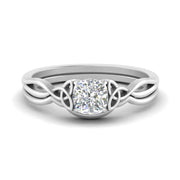

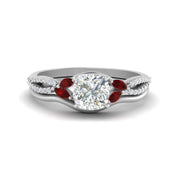


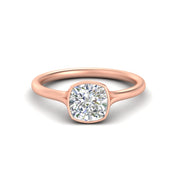

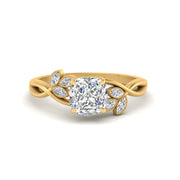

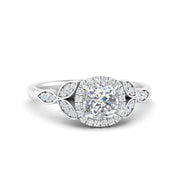

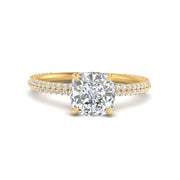

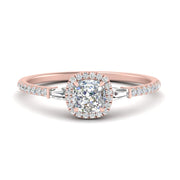

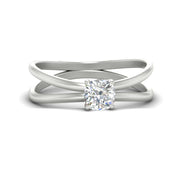









Real Customer Reviews
Cushion Cut Engagement Rings: Everything You Need to Know
Cushion cut diamonds have been one of the most sought-after shapes for engagement rings for over a century. Originally developed in the early 1800s as the "old mine cut," the cushion cut was the dominant diamond shape before round brilliants took over in the 20th century. Today's cushion cuts preserve that romantic, vintage character while incorporating modern precision cutting that significantly improves brilliance and fire.
The result is a diamond shape that sits at a rare intersection — enough vintage warmth to feel classic, enough modern sparkle to feel current. That's why cushion cuts consistently rank among the top three most-purchased engagement ring shapes in the US, alongside round and oval.
Square vs. Elongated Cushion Cut: Which Ratio Is Right for You?
The length-to-width ratio is the most important dimension decision when choosing a cushion cut engagement ring. A ratio between 1.00 and 1.05 produces a square cushion, where all four sides appear roughly equal. This shape looks bold and symmetrical on the finger and works especially well in solitaire and four-prong settings. A ratio between 1.15 and 1.30 produces an elongated cushion, which visually lengthens the finger and creates a softer, more oval-like silhouette. Elongated cushion cuts are trending strongly right now, partly because they offer more finger coverage per carat than a square cushion at the same weight.
If you're undecided, a ratio around 1.10 sits between the two and gives you flexibility depending on the setting.
Cushion Cut vs. Other Diamond Shapes
Cushion vs. Round: Round brilliants return more light overall because their symmetrical facet pattern is optimized for maximum brightness. Cushion cuts trade some of that precision for a softer, warmer glow with broader flashes of color (fire). Cushion cuts are also typically 15 to 25 percent less expensive per carat than round diamonds of comparable quality, making them an excellent choice if you want a larger center stone within budget.
Cushion vs. Princess: Both are square-ish shapes, but the similarities stop there. Princess cuts have sharp 90-degree corners that are prone to chipping over time and require V-prong protection. Cushion cuts have rounded corners that are naturally more durable and don't need specialized prong settings. Cushion cuts also produce more fire (colored light) compared to the princess cut's sharper, more geometric sparkle.
Cushion vs. Radiant: These two shapes are easy to confuse. Both are rectangular with cut corners, but radiant cuts have straight, cropped corners while cushion cuts have curved, rounded sides. Radiant cuts tend to produce more brightness, while cushion cuts produce more fire. If you want the rectangular shape with a softer, more romantic look, the cushion cut is the better choice.
Best Settings for Cushion Cut Engagement Rings
The rounded corners and large facets of a cushion cut diamond are versatile enough to work across nearly every ring setting, but certain styles bring out its best qualities.
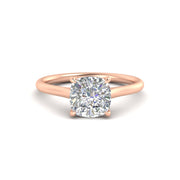
Solitaire Engagement Rings: A four-prong or claw solitaire setting is the most common choice for cushion cuts. It keeps the focus entirely on the center stone and lets the diamond's natural fire and depth show through without competition. This is the right choice if you want a timeless, unfussy ring that will never feel dated.
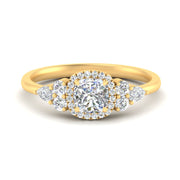
Halo Engagement Rings: A halo of round accent diamonds around a cushion center stone is one of the most popular engagement ring styles overall. The halo amplifies the apparent size of the center stone, making a 1-carat cushion look closer to 1.5 carats. It also softens and extends the silhouette of the cushion shape, which pairs particularly well with a square cushion cut. A hidden halo places the accent diamonds under the center stone, adding brilliance that's only visible at certain angles.
Pavé and French Pavé Engagement Rings: Pavé-set bands add micro-diamonds along the shank, contributing additional sparkle without drawing attention away from the center cushion. French pavé, where the prongs form a V-shape between each stone, creates a more delicate, lace-like texture that pairs beautifully with vintage-inspired cushion cut rings.
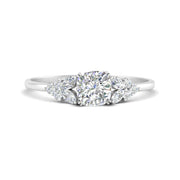
Three-Stone Engagement Rings: A cushion cut flanked by two smaller matching cushions or tapered baguettes creates a balanced, symmetrical look with significant total carat weight. The three-stone setting also carries strong symbolic meaning, representing a couple's past, present, and future, making it a popular choice for milestone proposals.
Bezel Engagement Rings: A full or partial bezel setting wraps a metal border around the girdle of the cushion cut, offering maximum protection for the stone and a clean, modern aesthetic. Bezel-set cushion cut rings tend to look especially polished in yellow gold.
Natural vs. Lab Grown Cushion Cut Diamonds
Fascinating Diamonds offers cushion cut engagement rings in both natural and lab grown diamonds. Natural cushion cut diamonds are mined from the earth and certified by GIA or IGI, carrying the rarity and long-term value associated with natural stones. Lab grown cushion cut diamonds are chemically and optically identical to natural diamonds, produced in controlled environments using the same carbon crystallization process. Lab grown options typically cost 50 to 70 percent less per carat than comparable natural diamonds, which means you can often select a larger center stone, a better color grade, or a more elaborate setting at the same price point.
Both options are available across all metal types and carat weights in this collection.
Metal Recommendations for Cushion Cut Rings
White gold and platinum are the most popular metal choices for cushion cut engagement rings. The cool, neutral tone creates a clean contrast against the diamond, enhancing the perception of brightness and making lower color grades (H-I) appear whiter than they would in a warmer metal.
Yellow gold works particularly well with cushion cut diamonds in the G-J color range. The warm tone of the metal complements the natural warmth of the cushion cut's fire, and the combination produces a rich, vintage-inspired look that has seen strong demand in recent years.
Rose gold pairs beautifully with cushion cuts, especially in halo and pavé settings. The blush tone softens the overall look and creates a romantic aesthetic that's especially popular in vintage and floral-inspired settings.
Shop Cushion Cut Engagement Rings at Fascinating Diamonds
Fascinating Diamonds is a New York-based jewelry brand manufacturing all rings in the USA. Every cushion cut engagement ring in this collection is available with a natural or lab grown center diamond, fully customizable in metal type, carat weight, and gemstone. Rings ship free with easy returns, and our team is available at +1 (212) 840-1811 for personalized guidance on selecting your ideal cushion cut ring.
FAQs For Cushion Cut Diamond Engagement Rings
What is a cushion cut diamond?
A cushion cut diamond is a square or rectangular diamond with softly rounded corners and curved sides. It typically has 58 to 64 facets arranged in a pattern that produces broad flashes of light and strong fire — the colored sparkle visible when the diamond moves. The shape evolved from the old mine cut of the 1800s and remains one of the most popular diamond shapes for engagement rings today.
What is the ideal length-to-width ratio for a cushion cut engagement ring?
For a square cushion cut, look for a length-to-width ratio between 1.00 and 1.05. For an elongated cushion cut, a ratio between 1.15 and 1.30 gives a softer, more finger-lengthening silhouette. Ratios between 1.05 and 1.15 sit in a transitional zone that can look slightly irregular, so most buyers prefer staying clearly within one range or the other.
What is the difference between a cushion brilliant and a cushion modified brilliant?
A cushion brilliant has a facet pattern closer to a round brilliant, with a chunky, crushed-ice appearance that scatters light in many small directions. A cushion modified brilliant has an extra row of facets that creates a more defined, larger-flash sparkle pattern. Neither is objectively better — cushion brilliants tend to look icier and more modern, while cushion modified brilliants show more distinct fire and depth. Your preference depends on whether you want tighter micro-sparkle or broader, more dramatic light return.
Is a cushion cut engagement ring a good choice?
Yes. Cushion cuts offer a rare combination of vintage character, strong brilliance, and excellent value. They cost 15 to 25 percent less per carat than round diamonds of comparable quality, which means you can typically buy a larger or better-graded stone at the same budget. The rounded corners are also more durable than sharp-cornered cuts like princess or marquise, reducing the risk of chipping over time.
What settings look best with a cushion cut diamond?
Cushion cut diamonds work well in solitaire, halo, pavé, three-stone, and bezel settings. A four-prong solitaire keeps the focus on the stone's natural fire. A halo adds perceived size and softens the cushion's silhouette. A pavé band adds brilliance without competing with the center stone. A bezel setting offers maximum protection and a clean modern look. The shape is versatile enough that the right setting mostly comes down to personal style rather than technical compatibility.
How much does a cushion cut engagement ring cost?
At Fascinating Diamonds, cushion cut engagement rings start at $989 for a natural diamond solitaire and range up to approximately $25,000 for larger carat weights with premium settings. A 1-carat natural cushion cut diamond engagement ring in 14K gold typically falls between $1,000 and $3,500 depending on cut quality, color, and clarity. Lab grown cushion cut rings in the same carat range typically cost 50 to 70 percent less than their natural diamond equivalents.
What is the difference between a cushion cut and a round cut diamond?
Round brilliant diamonds are cut for maximum light return and produce the highest brilliance of any diamond shape. Cushion cuts produce slightly less overall brightness but significantly more fire — the colored flashes of light that give the shape its romantic, vintage character. Cushion cuts are also less expensive per carat than round diamonds at equivalent quality grades and offer more shape variety, since you can choose between square and elongated proportions.
Do cushion cut diamonds look bigger than their carat weight suggests?
Elongated cushion cut diamonds tend to look larger than their carat weight because the stone spreads across more finger surface area. A 1-carat elongated cushion cut can appear visually similar in size to a 1.2 to 1.3-carat round diamond. Square cushion cuts have a smaller face-up diameter than round diamonds at the same carat weight, but a halo setting effectively compensates for this by extending the visual footprint of the center stone.