

Sapphire Necklaces & Pendants For Women
Blue sapphire is one of the most durable and visually commanding colored gemstones available for fine jewelry, rated 9 on the Mohs hardness scale and second only to diamond. Every necklace and pendant in this collection features a certified lab-grown blue sapphire set in 14K or 18K white gold, yellow gold, or rose gold with your choice of natural or lab-grown diamond accents. Styles span solitaire pendants, halo pendants, heart designs, bar pendants, cluster drops, graduated necklaces, and symbolic motif pieces. Prices start at $458. All pieces are made in the USA with free shipping and easy financing.
Explore Our Sapphire Necklaces & Pendants Collection











Real Customer Reviews
Why Blue Sapphire Is the Most Chosen Colored Stone for Necklaces
Blue sapphire brings a combination of qualities that no other colored gemstone matches for pendant and necklace applications. Its color is vivid, saturated, and consistent across lighting conditions, reading clearly whether worn under office fluorescents, natural daylight, or warm evening light. Its hardness (9 Mohs) means it resists surface scratching from the everyday contact that a necklace or pendant experiences, including contact with clothing, other jewelry, and skin. And its symbolic history, centuries of association with loyalty, wisdom, and trust, gives it a depth of meaning that elevates it beyond purely aesthetic choice.
A blue sapphire pendant sits against skin or clothing as the primary visual element of the piece. There is no surrounding ring setting to share attention, no diamond center stone to compete with. The stone carries the full weight of the design. This is why sapphire's color quality matters more in a necklace context than in almost any other jewelry format. Lab-grown blue sapphires in this collection are selected for consistent, vivid color that performs in that central role without compromise.
Lab-Grown Blue Sapphires: What You're Wearing
Every blue sapphire in this collection is lab-grown. Lab-grown blue sapphires are genuine sapphires. They share the same chemical composition as mined blue sapphires (aluminum oxide, Al₂O₃, with iron and titanium as the coloring agents responsible for the blue hue), the same corundum crystal structure, and the same 9 Mohs hardness. The only difference is origin.
For pendant and necklace applications specifically, lab-grown blue sapphires offer two consistent advantages over natural stones in the same price range. First, color uniformity. Natural blue sapphires frequently exhibit color zoning, uneven distribution of hue caused by variations in iron and titanium concentration during crystal growth. In a pendant where a single stone is the sole focus, color zoning is visible and distracting. Lab-grown sapphires are produced under controlled conditions that eliminate this variation, delivering consistent, deep blue across the entire face of the stone.
Second, clarity. Natural blue sapphires almost always contain inclusions. In a pendant setting worn close to the eye and observed in natural light against bare skin, inclusions visible to the naked eye interrupt the stone's visual impact. Lab-grown blue sapphires are typically eye-clean, meaning the stone's color reads without internal interruption. For the pendant format, this is a practical advantage that directly affects how the piece looks when worn.
Blue Sapphire Necklace and Pendant Styles
Solitaire pendants place a single blue sapphire at the center of the design, suspended on a chain with minimal surrounding metalwork. This is the purest expression of the stone's color and the most versatile format in the collection. Round and oval blue sapphires in prong settings are the most common solitaire configurations. Bezel solitaires, where the stone is encircled in a continuous metal rim, offer a cleaner, more modern outline. Solitaire blue sapphire pendants transition effortlessly from daily wear to formal occasions and pair with virtually any neckline or outfit.
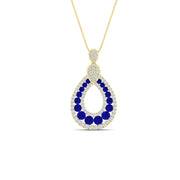
Halo pendants surround the blue sapphire with a ring of diamonds. The contrast between the vivid blue center and white diamond surround creates one of the most visually striking combinations in fine jewelry. The diamond halo amplifies the sapphire's perceived size and frames its color with brilliance. This collection includes single halo, double halo, and cushion halo designs. The double halo round pendant, with two concentric diamond rings around the sapphire center, is the most architecturally complex and visually dramatic halo design in the collection. The charming cushion halo round pendant pairs a round blue sapphire with a cushion-shaped diamond halo for a softer, more vintage-influenced silhouette.
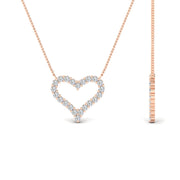
Heart pendants form the largest style category in this collection, reflecting blue sapphire's strong association with love and emotional significance. The range covers multiple interpretations of the heart motif.
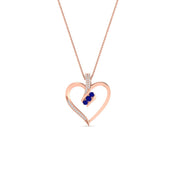
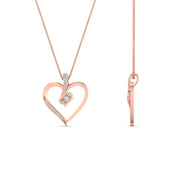
Open heart designs use the heart outline as the primary form, with the blue sapphire set within the metalwork frame rather than filling it. Designs in this category include the open heart pendant necklace, open heart design ladies pendant, necklace with open heart pendant, and double heart open pendant. Each varies in scale, metal weight, and stone placement but shares the same elegant negative-space aesthetic.
Closed and solitaire heart designs place a blue sapphire directly into a heart-shaped setting, making the stone itself the heart. The solitaire heart pendant uses a round sapphire in a heart-shaped mount. The heart infinity love diamond pendant combines a heart form with an infinity loop, adding symbolic meaning about enduring love.
Multi-heart designs stack or pair heart forms, including the cute dual heart pendant, 3-stone round heart pendant, and double heart pendant for women. These designs suit buyers who want romantic visual complexity rather than a single clean motif.
Bar pendants set blue sapphires in horizontal linear configurations that read as graphic and architectural. The baguette bar necklace uses baguette-cut blue sapphires in a clean, unbroken horizontal line. The princess cut horizontal bar pendant and 5-stone princess cut bar pendant arrange square-cut sapphires in a row, with the geometric cut emphasizing color over brilliance. Bar pendants suit buyers drawn to structured, minimal aesthetics and work particularly well with V-necklines and collared shirts where the horizontal pendant lies parallel to the neckline.
Cluster and drop pendants group multiple stones in organic or radiating arrangements, creating pendants with more visual density than solitaires. The pear drop diamond cluster pendant combines a pear-shaped blue sapphire center with diamond accents in a drop format, creating movement and layered visual interest. The multi-ring interlocked pendant stacks circular metal elements with sapphire accents in an architectural design with strong graphic character.
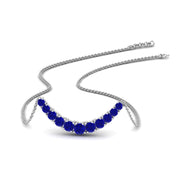
Graduated and smile necklaces curve multiple blue sapphires across the décolletage in a crescent formation, creating a continuous line of color rather than a single pendant focus point. The graduated smile necklace and graduated smile necklace for her both use progressively sized stones from the center outward, creating a sweeping arc of blue that reads as a statement piece. These are the highest-impact designs in the collection in terms of overall color presence.
Five-stone pendants place five blue sapphires in a row or cluster, often alongside diamond accents. The 0.50 carat five-stone round diamond pendant is the primary design in this format, offering balanced stone distribution in a clean, composed pendant.
Symbolic and motif pendants include designs where the setting form carries specific meaning. The moon pendant sets a blue sapphire in a crescent moon form, referencing the celestial associations that have connected sapphire to the night sky and divine wisdom across cultures. The two-tone infinity pendant combines a blue sapphire with an infinity motif in mixed metals. The two-stone round pendant places a pair of blue sapphires together, representing a bond between two people.
How Blue Sapphire Reads Against Different Metals
The metal choice for a blue sapphire necklace changes not only the ring's aesthetic but the way the sapphire's color is perceived.
White gold and platinum provide the cleanest, most neutral background for blue sapphire. The cool metal tone does not interact with or warm the sapphire's color, allowing the blue to read at its full intensity and saturation. This pairing gives blue sapphire necklaces a crisp, contemporary character and is the most widely chosen option. White gold requires periodic rhodium plating to maintain its white appearance. Platinum is more durable long-term and requires no replating.
Yellow gold creates warm contrast with blue sapphire. The combination of warm yellow metal and cool blue stone is a classic pairing with deep historical precedent in fine jewelry, visible in pieces from the Georgian period through modern design. Yellow gold blue sapphire necklaces read as rich and traditional. The warmth of the metal can make the sapphire's blue appear slightly deeper and more velvety by contrast.
Rose gold creates a softer, more romantic contrast with blue sapphire. The pinkish-rose tone against deep blue has a contemporary, fashion-forward quality that translates particularly well in heart pendants and cluster designs. Several designs in this collection, including the heart infinity love pendant and pear drop cluster pendant, were designed with rose gold as a primary pairing.
All pieces are available in 14K and 18K versions of each metal. 14K gold is harder and more scratch-resistant. 18K gold carries a higher pure gold content and deeper color tone.
Necklace Length and Blue Sapphire Pendants
Chain length determines where a pendant sits on the body and how it interacts with necklines and other jewelry. Choosing the right length for a blue sapphire pendant is as important as the pendant design itself.
A 16-inch chain sits at the collarbone and suits most pendant styles in this collection. It is the most versatile length for everyday wear and works well with V-necks, crew necks, and button-down collars.
An 18-inch chain drops to just below the collarbone, providing slightly more visual separation between the pendant and the face. This length suits slightly larger or heavier pendants, including halo designs and cluster drops, where the pendant benefits from resting against the upper chest rather than sitting at the throat.
A 20-inch chain positions the pendant at the upper chest or bust line. This length suits statement pendants, including the graduated smile necklace and the larger double halo designs, where the piece is intended to be a focal point of the outfit rather than a subtle accessory.
A 24-inch chain drops to the mid-chest. This length works well for layering alongside shorter necklaces and for pendant styles that are intended to be worn as a single prominent piece against a low neckline.
Blue Sapphire Necklace Care
Lab-grown blue sapphires are low-maintenance gemstones. Clean with warm water, mild dish soap, and a soft-bristle brush. Scrub gently around the pendant setting and stone, rinse thoroughly, and dry with a lint-free cloth. This removes the skin oils, perfume residue, and product buildup that accumulate with daily wear and progressively dull the stone's surface luster.
Ultrasonic and steam cleaning are both safe for lab-grown blue sapphires and are useful for reaching into intricate halo or cluster settings where a brush cannot access fully.
Apply perfume and lotions before putting on the necklace, not after. Perfume and chemical products do not damage sapphire directly, but they can affect metal finishes and build up in settings over time.
Store blue sapphire necklaces separately from other jewelry to prevent chains from tangling and to avoid the sapphire surface being scratched by harder materials. A soft pouch or individual jewelry box compartment is appropriate.
Have the pendant setting and chain checked by a jeweler annually, particularly for prong-set designs where the sapphire is held by metal claws that can wear or loosen over time.
Blue Sapphire Necklaces as Gifts
Blue sapphire necklaces are among the most consistently chosen fine jewelry gifts for significant occasions. The combination of symbolic meaning, visual impact, and wearability makes them appropriate across a wide range of relationships and events.
For anniversaries, blue sapphire is the traditional 45th anniversary gemstone, but its association with loyalty and enduring love makes it appropriate for any anniversary milestone. A blue sapphire pendant or heart necklace is among the most meaningful anniversary jewelry choices.
For birthdays, blue sapphire is the September birthstone, making it the natural choice for September birthday gifts. It also suits year-round gifting for buyers who want something more personal and less generic than diamond for a significant birthday.
For milestone celebrations, including graduations, promotions, and landmark achievements, a blue sapphire necklace communicates both elegance and personal attention. The stone's historical association with wisdom makes it particularly fitting for academic and career milestones.
For Mother's Day and Christmas, blue sapphire pendants are among the most requested fine jewelry gifts. Heart designs and solitaire pendants are the most popular formats for gifting because they are immediately legible as meaningful without requiring prior knowledge of the recipient's style preferences.
FAQs For Sapphire Necklaces & Pendants For Women
1. What makes sapphire necklaces and pendants special?
Yes. Blue sapphires rate 9 on the Mohs hardness scale and resist surface scratching from all everyday contact. They are among the most practical colored gemstones for jewelry worn daily without removal.
2. Are the blue sapphires in this collection natural or lab-grown?
All blue sapphires in this collection are lab-grown. They are genuine sapphires, chemically and physically identical to mined blue sapphires, with consistent color and higher clarity than most natural stones in the same price range.
3. What does a blue sapphire necklace symbolize?
Blue sapphires have historically symbolized loyalty, wisdom, trust, and faithfulness. These associations are consistent across European, Persian, and South Asian cultural traditions and make blue sapphire necklaces a particularly meaningful gift for relationships built on those values.
4. What is the best metal for a blue sapphire pendant?
White gold and platinum are the most popular choices, providing a cool neutral background that lets the sapphire's blue read at full intensity. Yellow gold creates warm traditional contrast. Rose gold offers a softer contemporary pairing that works especially well with heart and cluster designs.
5. What chain length works best for a blue sapphire pendant?
16 to 18 inches suits most pendant styles for everyday wear, sitting at or just below the collarbone. Larger statement pendants such as graduated necklaces and double halo designs suit 18 to 20 inches. Layering chains work best at 20 to 24 inches.
6. Can I clean my blue sapphire necklace with an ultrasonic cleaner?
Yes. Lab-grown blue sapphires are safe for ultrasonic cleaning, making them easier to maintain than softer gemstones. Manual cleaning with warm water, mild soap, and a soft brush is also effective for routine care.
7. What is the price range for blue sapphire necklaces at Fascinating Diamonds?
Prices in this collection start at $458 and reach $14,775 across 66 designs in multiple pendant styles, metal types, and diamond accent configurations.
8. Is a blue sapphire necklace appropriate as a September birthday gift?
Yes. Blue sapphire is the traditional September birthstone, making it the most personally significant gemstone gift for anyone born in September.
9. How should I care for sapphire necklaces and pendants?
Yes. Blue sapphire pendants pair naturally with diamond stud earrings or diamond hoops, where the colorless diamonds complement the sapphire without color competition. Blue sapphire bracelets or blue sapphire rings from the same collection create a coordinated color story across multiple pieces.