



Why the GIA Report Matters
The Gemological Institute of America, commonly known as GIA, is considered one of the most trusted and strict grading laboratories in the world. Their grading standards are consistent and widely accepted across the diamond industry.
If a diamond has a GIA report, it means:
- The stone was independently evaluated
- Its characteristics were professionally graded
- You can verify its identity
This transparency protects buyers from inflated claims and vague descriptions.


Frequently Asked Questions
1. What is a GIA diamond report?
A GIA diamond report is an official grading document issued by the Gemological Institute of America. It provides an independent assessment of a diamond’s quality based on strict grading standards. This report helps buyers understand exactly what they’re paying for and protects them from misrepresentation.
2. What does GIA stand for?
GIA stands for the Gemological Institute of America, one of the most respected and trusted diamond grading laboratories in the world.
3. Why is a GIA report important when buying a diamond?
A GIA report ensures the diamond’s quality has been evaluated by a neutral third party. Without certification, you’re relying solely on the seller’s description. A grading report adds transparency, accuracy, and resale value.
4. What are the 4Cs listed on a GIA report?
The 4Cs are the four key factors that determine a diamond’s value and overall quality: carat weight, which refers to the diamond’s size and weight; color grade, measuring how colorless the diamond is on a scale from D to Z; clarity grade, indicating the number and visibility of inclusions or blemishes; and cut grade, which affects how well the diamond reflects light and produces sparkle.
5. Where can I find the 4Cs on the report?
The 4Cs are usually listed in the main grading section, often on the left side of the report. They are clearly labeled and easy to identify.
6. What is the difference between cut and shape?
Shape refers to the diamond’s outline, such as round, oval, or princess. Cut refers to how well the diamond’s facets are proportioned and finished. A round diamond can have different cut grades, such as Excellent or Very Good.
7. What cut grade should I choose?
For round brilliant diamonds, Excellent cut is generally considered the best choice because it maximizes sparkle and light performance. For fancy shapes, GIA does not always provide a cut grade, so proportions become even more important.
8. What are polish and symmetry?
Polish measures how smooth the diamond’s surface is. Symmetry evaluates how precisely the facets align. Ideally, both should be graded Excellent for optimal brilliance.
9. What is fluorescence on a diamond report?
Fluorescence describes how a diamond reacts under ultraviolet light. Some diamonds glow blue under UV exposure. In most cases, faint or medium fluorescence does not negatively affect appearance.
10. Does fluorescence reduce a diamond’s value?
It depends on intensity. Very strong fluorescence can sometimes affect appearance in certain lighting conditions. Faint to medium fluorescence often has little to no visible impact and may even lower the price slightly, which can benefit buyers.
11. What is a clarity plot?
A clarity plot is a diagram that maps the exact location of inclusions and blemishes within the diamond. Think of it as a fingerprint that helps identify the specific stone.
12. Can inclusions be seen with the naked eye?
Not always. Many diamonds graded VS1, VS2, or even some SI1 stones are “eye-clean,” meaning inclusions are not visible without magnification.
13. What are proportions on the report?
The proportions diagram shows angles, depth percentage, table percentage, and other measurements that affect how light travels through the diamond. Proper proportions enhance sparkle and brilliance.
14. What is the report number?
The report number is a unique identification number assigned to that specific diamond. It can be verified directly on the GIA website.
15. What is laser inscription?
Many GIA-graded diamonds have the report number laser-inscribed on the girdle. This microscopic engraving matches the certificate and confirms authenticity.
16. How can I verify a GIA report?
You can enter the report number on GIA’s official website to confirm that the details match your diamond.
17. Does a GIA report show if a diamond is lab-grown?
Yes. If the diamond is laboratory-grown, the report clearly states it. It may also mention the growth method, such as CVD or HPHT.
18. Is a GIA report the same as an appraisal?
No. A grading report evaluates quality characteristics. An appraisal assigns a monetary value, often for insurance purposes.
19. Does certification increase a diamond’s price?
Certification does not increase quality, but it can increase buyer confidence and resale value. Uncertified diamonds may appear cheaper, but they carry higher risk.
20. How long is a GIA report valid?
A GIA grading report does not expire. However, market prices and appraised values can change over time.
21. Should I buy a diamond without a GIA certificate?
For significant purchases, certification from a reputable lab like GIA is strongly recommended. It ensures transparency and protects your investment.
Related Search
More From This Blog
-

How to Pair a Marquise Engagement Ring with a Wedding Band
-

4 Things You Need to Know Before Buying Oval Cut Diamonds
-

How to Style Leverback Earrings: A Complete Guide
-

How to Build the Perfect Stackable Ring Set
-
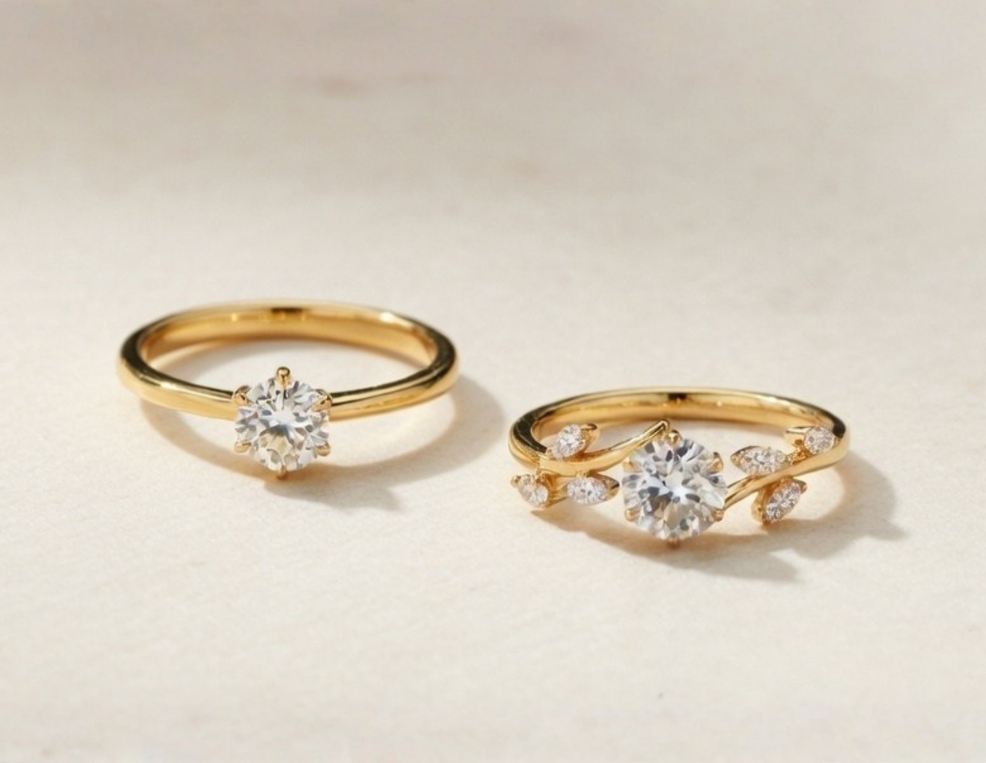
Why Choose a 6 Prong Engagement Ring? Pros and Cons
-

Diamond Cut Grades Guide
-

Mother’s Day Jewelry Gift Ideas She’ll Love: The Complete Gift Guide
-

How Big Does a 1 Carat Diamond Engagement Ring Look?


