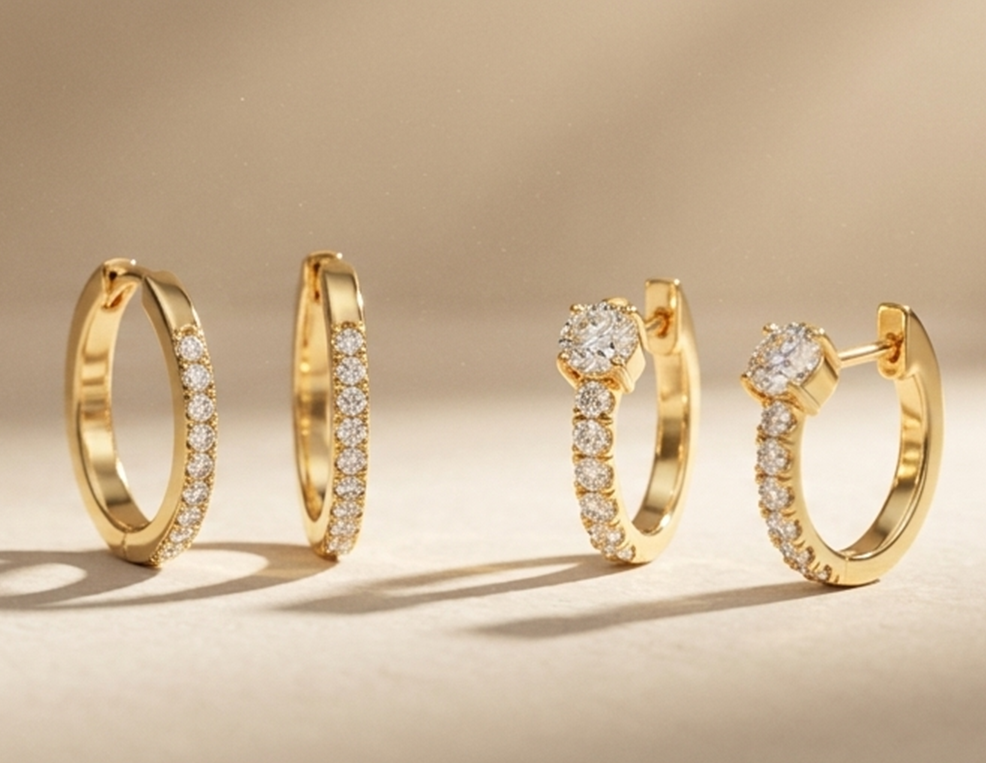
Some pieces of jewelry exist at the intersection of history, culture, and enduring style. The tennis necklace is one of them. It's worn on red carpets and at morning coffee. It's gifted for anniversaries and bought as a personal treat. It's been around in various forms for over two centuries, and it shows no signs of fading. Yet for all its familiarity, most people can't fully explain what a tennis necklace actually is, where it came from, or why it's considered a fine jewelry essential rather than a passing trend.
This guide covers all of it — definition, history, meaning, styles, and everything you need to know before buying one.
What Is a Tennis Necklace?
A tennis necklace is a flexible necklace featuring a continuous, symmetrical line of individually set diamonds or gemstones linked together in a seamless chain that encircles the entire neck. Each stone is mounted separately within its own setting and connected through a flexible metal link structure, allowing the necklace to drape smoothly and move naturally with the body.
The defining characteristic of a tennis necklace is the unbroken line of stones — there are no gaps, no pendants, no focal points. Every stone is equal in size, cut, and setting, creating a continuous river of diamond that sits flush against the neckline. This uniformity is what gives the tennis necklace its distinctive visual rhythm and why it's often called a rivière necklace — from the French word for river.
Tennis necklaces are available in a wide range of lengths, carat weights, diamond shapes, setting styles, and metals. A delicate 14-inch choker with 3 total carats and a bold 18-inch necklace with 15 total carats are both tennis necklaces — the format is consistent, the scale varies dramatically.
The History of Tennis Necklaces
Linked gemstone necklaces date back thousands of years across Egyptian, Greek, and Roman civilizations, worn as symbols of power and status. Notably, men were the earliest prominent wearers — gem-laden chains signaled rank for kings and nobles long before diamond jewelry was associated primarily with women.
The tennis necklace's most direct ancestor is the rivière necklace, which emerged in Napoleonic France in the early 19th century — a continuous row of matched diamonds worn as the ultimate expression of aristocratic luxury. The style revived during the Art Deco era, when platinum replaced gold as the preferred metal.
The modern name traces to the 1980s, when tennis champion Chris Evert stopped a US Open match to search for her fallen diamond line bracelet. The incident received wide media coverage, the style became known as a tennis bracelet, and matching necklaces followed naturally.
Tennis Necklace Meaning
A Symbol of Continuous Love and Connection The most widely held meaning attributed to a tennis necklace is continuity. The unbroken circle of diamonds — each stone connected to the next, no beginning and no end — is interpreted as a symbol of enduring love, loyalty, and connection. This makes the tennis necklace a popular gift for significant anniversaries, particularly milestone years where permanence and commitment are being celebrated.
Elegance Without Excess The tennis necklace also carries cultural meaning as a symbol of understated luxury. Its design philosophy — uniform stones, clean settings, no focal point or embellishment — says that the wearer doesn't need ornamentation to make an impression. The piece's value and beauty speak through quality and simplicity rather than scale or complexity. In fine jewelry, that kind of restraint is a sophisticated signal.
Versatility as a Value The tennis necklace's ability to work across all occasions — from a morning at a coffee shop to a black-tie event — has given it cultural meaning as a piece for the woman (or man) who moves between worlds. It's not reserved for special occasions. It's not too casual for formal ones. This versatility is part of what the tennis necklace represents in contemporary jewelry culture: fine jewelry that actually lives in the real world.
A Personal Milestone Marker Beyond gifting, tennis necklaces are frequently bought as self-purchases to mark personal milestones — a promotion, a significant birthday, a personal achievement. The piece's combination of genuine value, diamond quality, and lasting design makes it a natural way to commemorate a moment that deserves permanent recognition.
How a Tennis Necklace Differs from a Tennis Bracelet
The tennis necklace and diamond tennis bracelet share the same design DNA — both feature a continuous line of individually set diamonds in a flexible linked structure. The differences are scale, placement, and occasion range.
A tennis bracelet wraps the wrist, typically measuring 6.5 to 7.5 inches in length with a total diamond weight of 1 to 5 carats. A tennis necklace encircles the neck, typically measuring 14 to 20 inches in length with a total diamond weight ranging from 3 to 25 carats depending on stone size and necklace length.
Because a tennis necklace contains significantly more stones across a much longer length, it's a more substantial investment than an equivalent tennis bracelet. It also makes a larger visual statement — a 16-inch tennis necklace sitting at the collarbone is immediately visible in a way that a wrist-worn bracelet isn't.
For a detailed breakdown of tennis bracelet styles and settings, our guide on [LINK: different types of tennis bracelets] covers every configuration in depth.
Types of Tennis Necklaces
Tennis Necklace by Setting Style
Prong set tennis necklace: The most classic configuration. Each diamond is held by three or four metal prongs, maximizing light exposure and delivering the strongest brilliance of any setting style. Prong set tennis necklaces are the most traditional choice and the most widely available.
Bezel set tennis necklace: Each diamond is encircled by a continuous metal rim. The result is a sleek, modern profile with strong stone protection — the best choice for daily wear and active lifestyles. Bezel set necklaces sacrifice a small amount of brilliance for significantly more durability.
Channel set tennis necklace: Diamonds sit between two parallel metal rails, edge-to-edge with no prongs. The channel creates a clean, uninterrupted line of stone with a smooth, snag-free surface. Channel set necklaces suit princess cut and baguette diamonds particularly well.
Pavé set tennis necklace: Small diamonds packed closely together with minimal metal between them. The pavé surface creates a continuous shimmer rather than individual stone sparkle — a richer, more textured look than prong or bezel configurations.
Tennis Necklace by Diamond Shape
Round brilliant: The most popular diamond shape for tennis necklaces. Maximum brilliance, timeless aesthetic, compatible with all setting styles.
Oval cut: A larger face-up surface area per carat than round brilliants, creating more visual coverage along the necklace length. Oval tennis necklaces have a softer, more fluid look than round brilliant versions.
Emerald cut: Step-cut faceting creates long, linear light flashes rather than scattered brilliance. Emerald cut tennis necklaces are the most architectural and editorial choice — sophisticated, graphic, and distinctly modern.
Baguette: Long, narrow rectangular stones set end-to-end create one of the most graphic tennis necklace configurations available — the stones form an almost unbroken bar of diamond along the neckline.
Tennis Necklace by Length
Tennis necklace length determines where the piece sits on the body, which significantly affects its visual impact and which necklines it suits.
Length
Name
Sits At
Best For
14 inches
Choker
Base of throat
Crew necks, high necklines, layering base
16 inches
Collar
Collarbone
V-necks, scoop necks, most necklines
18 inches
Princess
Just below collarbone
Most versatile length, suits all necklines
20 inches
Matinee
Upper chest
Open necklines, statement wear
24 inches
Opera
Mid-chest
Evening wear, dramatic styling
The 16-inch and 18-inch lengths are the most widely purchased for everyday wear. The 14-inch choker length has seen a significant fashion resurgence and is the most popular choice for layering.
Tennis Necklace by Metal
White gold: The most popular metal for diamond tennis necklaces. Its neutral tone creates maximum contrast with colorless diamonds and suits all skin tones. Requires periodic rhodium replating to maintain its bright white finish.
Yellow gold: Increasingly the dominant choice in contemporary fine jewelry. Yellow gold tennis necklaces — particularly in 14k or 18k — carry warmth and richness that white metal doesn't replicate. Strong contrast against colorless diamonds and a natural complement to warmer skin tones.
Rose gold: The most romantic metal choice. Rose gold tennis necklaces suit fair to medium skin tones especially well and pair beautifully with oval and round brilliant diamonds.
Platinum: The most premium and durable option. Naturally white with no plating required, dense and highly resistant to wear over decades. The strongest choice for high-value tennis necklaces intended for long-term daily wear.
Why a Tennis Necklace Is a Fine Jewelry Essential
It Works for Every Occasion : No other fine jewelry piece transitions as naturally between contexts. A 16-inch necklace in white gold works equally well with a T-shirt and jeans, a business suit, and a wedding gown — it elevates every outfit without overpowering it.
It Layers Naturally : Its clean, unembellished format makes it the ideal anchor for any necklace stack. Pair a 14-inch choker with a 16-inch pendant and an 18-inch chain for a coordinated, fashion-forward look.
It Holds Its Value : A well-made IGI and GIA certified diamond tennis necklace is appraised on its diamond content — cut, color, and clarity matched consistently across the full length — making it one of the strongest value-holding necklace categories.
It's Giftable at Any Milestone : Anniversary, birthday, graduation, push present, Mother's Day — the tennis necklace maps naturally onto almost every occasion.
Lab-Grown Diamonds Make It More Accessible : Lab grown diamonds cost 50–70% less per carat with no visual difference, making higher carat weights and better color grades achievable within any budget.
What to Look for When Buying a Diamond Tennis Necklace
Diamond Quality Consistency matters as much as individual stone quality. Diamonds should be closely matched in color and clarity so the line reads as uniform — any discrepancy between adjacent stones is far more noticeable on a necklace than on a ring or bracelet. Prioritize G-H color, VS2-SI1 clarity, Excellent cut.
Total Carat Weight Tennis necklaces are priced by total carat weight (TCW). Always check both TCW and individual stone size — a 5 TCW necklace with 50 stones (0.10ct each) looks very different from one with 25 stones (0.20ct each).
Clasp Quality The clasp is the most functionally critical element. A lobster claw or box clasp with a safety catch are the most secure options. It should open and close with a confident click and show no looseness.
Certification Individual stones in tennis necklaces are rarely certified separately. Buy from a retailer who documents diamond quality specifications in writing. For certification standards, read our guide on IGI vs GIA certified diamonds.
How to Care for a Diamond Tennis Necklace
Clean every two to four weeks with warm water, mild dish soap, and a soft-bristled brush — pay particular attention to the settings where dirt and oil accumulate
Remove before swimming, showering, or exercising — chlorine and saltwater accelerate metal wear and can loosen settings over time
Store flat or hanging in a fabric-lined jewelry box — avoid coiling tightly, which can stress the links
Have settings and clasp professionally inspected once a year — particularly important for prong set necklaces where individual prongs can loosen with wear
For white gold necklaces, replating the rhodium surface every one to two years maintains the bright white finish
Final Thoughts
The tennis necklace has earned its status as a fine jewelry essential through two centuries of consistent relevance. It began as a symbol of aristocratic luxury in Napoleonic France, became a fine jewelry staple through the Art Deco era, found its modern name through a moment on a tennis court, and has remained one of the most versatile and widely worn diamond pieces in the world ever since.
Its appeal is straightforward: it's a continuous line of diamond that works everywhere, ages beautifully, and says exactly what fine jewelry should — quality, permanence, and a refusal to be anything other than what it is.
At Fascinating Diamonds, our diamond tennis necklace collection features GIA and IGI certified stones across every major setting style, diamond shape, length, and metal. Browse the collection to find the configuration that fits your style, your neckline, and your budget.
Frequently Asked Questions
1. What is a tennis necklace?
✚
A tennis necklace is a flexible necklace featuring a continuous, symmetrical line of individually set diamonds or gemstones in a linked structure that encircles the entire neck. Each stone is equal in size and cut, creating an unbroken river of diamond with no gaps or focal points. The style is also known as a rivière necklace.
2. Why is it called a tennis necklace?
✚
The name derives from the term "tennis bracelet," which entered popular culture after American tennis champion Chris Evert stopped a match to search for her fallen diamond line bracelet. When matching necklaces in the same continuous diamond line format were produced, they were called tennis necklaces by extension.
3. What is the difference between a tennis necklace and a rivière necklace?
✚
They are the same style. Rivière is the traditional French term for a continuous line diamond necklace, used in fine jewelry since the Napoleonic era. Tennis necklace is the modern popular term for the same design, used since the late 1980s.
4. How many diamonds are in a tennis necklace?
✚
The number varies by necklace length and individual stone size. A typical 16-inch tennis necklace with 0.10ct per stone contains approximately 50 diamonds. A necklace with larger individual stones (0.20ct per stone) at the same length contains approximately 25 stones. Total carat weight (TCW) is the most useful specification when comparing necklaces.
5. What is a good carat weight for a tennis necklace?
✚
For everyday wear, 3 to 7 TCW in a 16-inch to 18-inch length is the most versatile range — substantial enough to be visible and impactful but light enough for comfortable daily wear. For statement or occasion pieces, 10 TCW and above creates a bolder, more dramatic presence.
6. Is a diamond tennis necklace a good investment?
✚
A well-made tennis necklace with documented diamond quality holds its value better than most other necklace categories. The piece's value is substantially tied to its diamond content — TCW, color, clarity, and cut — which can be appraised independently of the design. GIA or IGI certified diamond quality documentation strengthens investment value.
7. Can men wear tennis necklaces?
✚
Yes. Tennis necklaces have been worn by men throughout jewelry history, and their resurgence among male style figures — musicians, athletes, and cultural tastemakers — has made them one of the most fashionable men's fine jewelry pieces available today. The clean, linear silhouette works naturally in both formal and streetwear contexts.
8. What length tennis necklace should I buy?
✚
16 inches (collarbone) is the most versatile length for everyday wear and suits most necklines. 14 inches is the most fashion-forward choice for layering and suits high necklines. 18 inches works well for V-necks and open necklines. The right length depends on your neckline preferences and whether you plan to wear the necklace alone or layered.
9. How do I style a tennis necklace?
✚
A tennis necklace works as a standalone statement piece or as the foundation of a layered necklace stack. For layering guidance, styling by outfit, and neckline recommendations, see our complete guide on [LINK: how to style a tennis necklace].
10. Are lab-grown diamond tennis necklaces worth buying?
✚
Yes. Lab-grown diamonds are chemically and optically identical to natural diamonds and cost 50 to 70% less per carat. For a tennis necklace — which requires many individually set stones — lab-grown diamonds make a meaningful difference in what's achievable at a given budget. The visual result is indistinguishable from a natural diamond tennis necklace of the same specifications.
Fascinating Diamonds supplies products listed on the Fascinating Diamonds, and Fascinating Diamonds websites, and in our stores under the following Terms and Conditions. Please read these Terms and Conditions, and our Privacy and Cookie Policies carefully before using any of our websites, or ordering from us.
The Terms and Conditions apply to your use of any Fascinating Diamonds website and to any products you purchase from them; regardless of how you access the website, including any technologies or devices where our website is available to you at home, on the move or in store
We reserve the right to update these Terms and Conditions at any time, and any updates affecting you or your purchases will be notified to you, by us in writing (via email), and on this page.
The headings in these Conditions are for convenience only and shall not affect their interpretation.
We recommend that you print and keep a copy of these Terms and Conditions for your future reference...