

Emerald Necklaces and Pendants for Women
Emerald brings one of the most distinctive colors in fine jewelry to the pendant format, a vivid green with over 4,000 years of history in royal and ceremonial adornment. Every necklace and pendant in this collection features a certified lab-grown green emerald rated 7.5 to 8 on the Mohs hardness scale, set in 14K or 18K white gold, yellow gold, or rose gold with your choice of natural or lab-grown diamond accents. Styles span halo pendants, heart designs, bar pendants, cluster drops, infinity forms, circle pendants, and graduated statement necklaces. Prices start at $458. All pieces are made in the USA with free shipping and easy financing.
Explore Our Emerald Necklaces and Pendants Collection


















Real Customer Reviews
Why Emerald Necklaces Hold a Unique Place in Fine Jewelry
Emerald occupies a category of its own among colored gemstones for necklaces. Where ruby commands attention through intensity and sapphire through cool, saturated depth, emerald communicates something different entirely: growth, vitality, and a connection to the natural world that no other gemstone replicates. The color is vivid green with a warmth that comes from the chromium and vanadium trace elements responsible for it, a hue that has been considered the most valuable green in nature for millennia.
The cultural and historical record on emerald is extensive. Cleopatra claimed Egypt's emerald mines as personal property. Mughal emperors commissioned carved emeralds inscribed with verses as diplomatic gifts and symbols of imperial authority. Spanish conquistadors discovered the Incan sacred emerald caches in the 16th century and shipped them to European courts, where they entered royal jewelry collections that still exist today. Elizabeth Taylor's Colombian emerald suite, worn throughout her career, remains one of the most photographed fine jewelry collections in modern history.
That history matters in a pendant context because a necklace sits at eye level, visible in close proximity, and observed by the wearer and others throughout the day. Wearing a gemstone with this depth of cultural resonance at the neckline is different from wearing it on the hand. It is a deliberate presentation of something significant.
Emerald is also the May birthstone, which gives it personal meaning for buyers born in May or giving gifts to people with May birthdays, anniversaries, or other May-connected milestones.
Lab-Grown Green Emeralds: What This Collection Offers
Every emerald in this collection is lab-grown. Lab-grown emeralds are genuine emeralds, sharing the same chemical composition as mined stones (beryllium aluminum silicate, Be₃Al₂Si₆O₁₈, with chromium and vanadium as coloring agents), the same hexagonal beryl crystal structure, and the same 7.5 to 8 Mohs hardness. The difference is origin and the practical qualities that flow from it.
Natural emeralds are almost universally heavily included. The network of fractures, liquid-filled cavities, and crystal growth irregularities that gemologists call "jardin" is so consistent in natural emeralds that the trade accepts heavily included stones routinely, far more than with sapphires or rubies. Most commercial natural emeralds are also treated with cedar oil or resin to fill surface-reaching fractures, a process that temporarily improves clarity but requires ongoing disclosure and can affect long-term stability under heat or chemical exposure.
Lab-grown emeralds are produced through the hydrothermal method, replicating natural beryl crystal growth in controlled conditions at elevated temperatures and pressures. The result is an emerald with fewer inclusions, more consistent vivid green color, and no fracture-fill treatment concerns. For a pendant where a single emerald is suspended on a chain and observed close to bare skin, this clarity and color consistency directly affect how the piece looks when worn. An eye-clean emerald with even, saturated green reads entirely differently than a heavily included natural stone of the same carat weight.
Understanding Emerald's Durability for a Necklace
Emerald rates 7.5 to 8 on the Mohs hardness scale. This is an important gemological fact to understand before purchasing an emerald necklace, because it differs from the hardness ratings of ruby and sapphire (both 9) and diamond (10), and it affects appropriate care practices.
At 7.5 to 8, emerald resists surface scratching from most everyday contact. Common dust, fabric, and environmental abrasives rate below 7 on the Mohs scale, so normal daily pendant wear does not typically scratch the stone. The durability concern with emerald is brittleness rather than surface hardness. Emerald has natural cleavage planes and is more prone to chipping under sharp direct impact than harder gemstones.
For a necklace, this is a lower practical concern than for a ring, because pendants and earrings experience less impact stress than jewelry worn on the hands. A pendant suspended on a chain moves with the wearer rather than making contact with hard surfaces, which reduces the risk of impact. That said, emerald necklaces should be removed before activities involving significant impact or chemical exposure, and they require specific care practices that differ from ruby and sapphire. These are detailed in the care section below.
Emerald Necklace and Pendant Styles
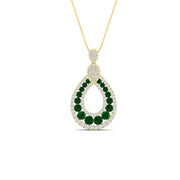
Halo pendants surround the emerald center with a ring of diamonds, creating a strong visual contrast between vivid green and white diamond brilliance. The oval halo pave drop necklace pairs an oval emerald with a full pave diamond surround in a drop setting that moves on the chain. The double halo round pendant places two concentric diamond rings around a round emerald, creating the most architecturally complex pendant in the collection. The charming cushion halo round pendant pairs a round emerald with a cushion-shaped diamond halo, giving the piece a vintage-influenced silhouette.
Heart pendants are the largest style category in the collection. Emerald's associations with love, growth, and Venus in classical tradition make the heart format a natural pairing for the stone.
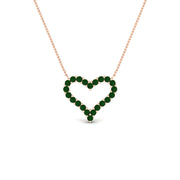
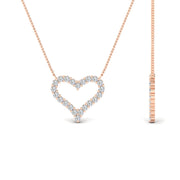
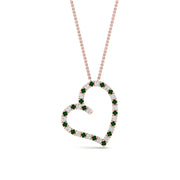
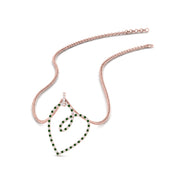
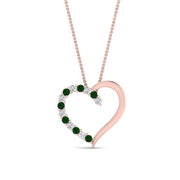
Open heart designs use the heart outline as the primary form, with the emerald set along or within the metalwork frame. This category includes the open heart necklace pendant, open heart pendant necklace, open heart design ladies pendant, necklace with open heart pendant, and double heart open pendant. Each varies in scale and stone placement while sharing the negative-space aesthetic that makes the heart outline read clearly.
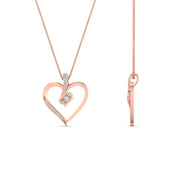
Closed and solitaire heart designs place the emerald directly into a heart-shaped mount. The solitaire heart pendant places a round emerald in a prong-set heart mounting. The heart infinity love pendant pairs a heart form with an infinity loop, adding symbolic resonance about enduring love that aligns naturally with emerald's associations.
Multi-heart designs include the cute dual heart pendant, 3-stone round heart pendant, and double heart pendant for women, each offering different levels of visual complexity within the heart vocabulary. These suit buyers who want romantic layering rather than a single clean form.
Bar pendants set emeralds in horizontal linear configurations. The baguette bar necklace places baguette-cut emeralds in an unbroken horizontal line. This format particularly suits emerald because the step faceting of baguette cuts emphasizes color over brilliance, which is exactly where emerald's visual strength lies. Bar pendants work well with V-necklines where the horizontal pendant aligns with the collar.
Cluster and drop pendants use multiple stones in organic or radiating arrangements. The pear drop diamond cluster pendant combines a pear-shaped emerald center with diamond accents in a drop setting that creates movement and layered visual depth. The multi-ring interlocked pendant stacks circular metal elements with emerald accents in an architectural stack with strong graphic character.
Infinity and floating pendants are unique to the emerald collection relative to the ruby and sapphire equivalents. The infinity style floating pendant uses an open infinity form with emeralds appearing to float within the metalwork, creating an airy, contemporary design with symbolic resonance about continuity. The two-tone infinity pendant places an emerald in an infinity motif in mixed metals for a more graphic interpretation of the same symbol.
Circle pendants include the double circle pendant necklace, which layers two interlocking or concentric circles with emerald accents. Circle and orbit designs have strong contemporary appeal and work well in layered arrangements with simpler chains.
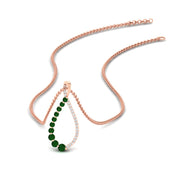
Graduated and smile necklaces curve multiple emeralds across the décolletage in a crescent formation. The graduated smile necklace and graduated smile necklace for her both use progressively sized emeralds from the center outward, creating a sweeping arc of green that reads as a statement piece rather than a simple pendant. These are the most visually impactful designs in the collection.
Five-stone pendants and two-stone designs offer scaled-down multi-stone configurations. The 0.50 carat five-stone round diamond pendant with emerald places five emeralds in a row with diamond accents. The two-stone round pendant pairs two emeralds in a balanced composition representing a bond between two people.
Symbolic and motif pendants include the moon pendant, which sets an emerald in a crescent moon form. Emerald's historical association with Venus and with nature means the moon motif carries cultural coherence with the stone's symbolism.
Emerald and Diamond: The Green and White Pairing
Emerald and diamond is one of the most celebrated two-stone combinations in fine jewelry. The pairing works because the two stones contrast in the most fundamental way: emerald is opaque with color saturation as its primary quality, while diamond is transparent with brilliance as its primary quality. Set together, each amplifies the other. The diamond surround makes the emerald's green appear more vivid by providing a bright neutral frame. The emerald center makes the diamond accents appear more brilliant by contrast.
This relationship is visible in every halo design in this collection and in the diamond accent settings that run throughout the range. Natural and lab-grown diamond accents are both available. Lab-grown diamond accents provide more diamond coverage at lower prices. Natural diamond accents carry provenance value for buyers for whom origin matters.
Metal Pairings for Emerald Necklaces
Yellow gold is emerald's most historically established pairing, with precedent in Mughal, Renaissance, and Victorian jewelry. The warm metal tone amplifies and complements emerald's green in a way that cool metals do not. Yellow gold emerald necklaces read as rich, warm, and deeply classical. Several designs in this collection, including the oval halo pave drop and charming cushion halo pendant, photograph most compellingly in yellow gold with emerald.
White gold provides cool, neutral contrast that lets the emerald's green read with maximum clarity and intensity. The pairing gives emerald pendants a crisp, contemporary character. White gold requires periodic rhodium plating to maintain its white appearance. For buyers who want the same neutral cool background without maintenance requirements, platinum is the more durable long-term alternative.
Rose gold creates a warm complementary contrast with emerald green. The pink-rose metal tone against vivid green produces a romantic, fashion-forward pairing that translates especially well in heart pendant and cluster drop designs. The heart infinity love pendant and pear drop cluster pendant are among the designs that read most strongly in rose gold with emerald.
All pieces are available in 14K and 18K versions of each metal. 14K gold is harder and more scratch-resistant. 18K gold carries a higher pure gold content and richer color tone.
Necklace Length and Emerald Pendants
Chain length determines where an emerald pendant sits on the body and how it interacts with necklines, clothing, and other jewelry.
A 16-inch chain sits at the collarbone and suits most pendant styles in this collection for everyday wear. It works with V-necks, scoop necks, and crew necks equally well and is the most versatile everyday length.
An 18-inch chain drops just below the collarbone, providing more visual separation between the pendant and the face. This length suits larger pendants including the halo designs, cluster drops, and multi-ring interlocked pendant, where the piece benefits from sitting against the upper chest.
A 20-inch chain positions the pendant at the upper chest or bust line. This suits the graduated smile necklaces and other statement pendants intended to be focal points of the outfit.
A 24-inch chain drops to the mid-chest and works well for layering with shorter necklaces. Emerald pendants layer naturally with plain gold chains or diamond tennis necklaces at shorter lengths.
Emerald Necklace Care
Emerald requires more specific care than ruby or sapphire due to its lower Mohs hardness and natural cleavage. The following practices apply specifically to emerald and differ from general gemstone jewelry care.
Clean emerald necklaces with warm water, mild dish soap, and a soft-bristle brush only. Scrub gently around the pendant setting and stone, rinse thoroughly with lukewarm water, and dry with a lint-free cloth. This is the only recommended home cleaning method for emerald.
Do not use ultrasonic cleaners on emerald necklaces. Ultrasonic vibrations can widen natural fractures within the stone and compromise structural integrity. This applies to lab-grown emeralds as well as natural stones, because the cleavage sensitivity is a physical property of the beryl mineral structure, not a consequence of treatment.
Do not use steam cleaners. Sudden thermal shock from steam can stress the stone along cleavage planes.
Apply perfume, hairspray, and lotions before putting on the necklace. Household chemicals including bleach, chlorine, and acetone can damage both the stone and the metal setting over time. Remove the necklace before swimming in chlorinated pools.
Store emerald necklaces separately from other jewelry, particularly pieces containing diamonds or sapphires, which can scratch the emerald surface. A soft pouch or individual jewelry box compartment is appropriate.
Emerald Necklaces as Gifts
Emerald necklaces are among the most meaningful colored gemstone gifts across a range of occasions. The combination of visual impact, historical symbolism, and personal significance makes them appropriate for relationships and milestones where a generic diamond piece would feel insufficient.
For May birthdays, emerald is the traditional birthstone, making an emerald necklace the most personally specific fine jewelry gift for anyone born in May.
For anniversaries, emerald is the traditional 20th and 35th anniversary gemstone. Its symbolism of growth, renewal, and flourishing makes it particularly appropriate for anniversaries celebrating years of shared life.
For Mother's Day, emerald pendants are a consistently popular choice, particularly heart designs that carry additional emotional symbolism. The stone's connection to Venus, love, and the natural world reinforces the occasion's themes.
For milestone celebrations including graduations, promotions, and personal achievements, emerald's historical association with wisdom and growth makes it a particularly fitting choice. A graduated smile necklace or statement halo pendant communicates celebration with a level of intentionality that a standard diamond necklace cannot match.
FAQs For Emerald Necklaces and Pendants for Women
1. Are emerald necklaces durable enough for everyday wear?
Yes, with appropriate care. Emerald rates 7.5 to 8 on the Mohs hardness scale and resists everyday scratching. It is more brittle than ruby or sapphire and requires specific care to avoid impact and chemical exposure. For pendant and necklace applications, where impact stress is lower than for rings, emerald is fully suitable for regular wear.
2. How does emerald's durability compare to ruby or sapphire?
Sapphire and ruby both rate 9 on the Mohs scale. Emerald rates 7.5 to 8. Emerald resists everyday contact scratching but is more brittle along natural cleavage planes. For a pendant worn on a chain rather than on the hand, the practical difference is manageable with appropriate care.
3. Are the emeralds in this collection natural or lab-grown?
All emeralds are lab-grown. They are genuine emeralds, chemically and physically identical to mined stones, with superior clarity and more consistent green color than most commercially available natural emeralds in the same price range.
4. What does an emerald necklace symbolize?
Emerald has historically symbolized love, growth, renewal, wisdom, and new beginnings. It was sacred to Venus in classical tradition, associated with the heart chakra in Eastern practice, and used in royal and ceremonial jewelry for over 4,000 years. It is also the May birthstone and the traditional 20th and 35th anniversary gemstone.
5. Can I clean my emerald necklace with an ultrasonic cleaner?
No. Ultrasonic cleaning is not safe for emeralds. The vibrations can widen natural fractures in the stone regardless of whether the emerald is lab-grown or natural. Clean only with warm water, mild soap, and a soft brush.
6. What metal works best with an emerald necklace?
Yellow gold is the most historically established pairing and amplifies the stone's warmth. White gold provides clean, contemporary contrast that lets the green read clearly. Rose gold creates a romantic complementary pairing that works especially well with heart and cluster designs.
7. What chain length works best for an emerald pendant?
16 to 18 inches suits most pendant styles for everyday wear. Larger statement pendants including graduated smile necklaces suit 18 to 20 inches. Layering arrangements work best at 20 to 24 inches.
8. Is an emerald necklace a good May birthday gift?
Yes. Emerald is the May birthstone, making it the most personally significant gemstone gift for anyone born in May. Solitaire heart pendants and halo designs are the most popular formats for birthday gifting.
9. What is the price range for emerald necklaces at Fascinating Diamonds?
Prices in this collection start at $458 and reach $14,775 across 62 designs in multiple pendant styles, metal types, and diamond accent configurations.
10. Do emerald necklaces pair well with emerald earrings or rings?
Yes. Emerald pendants pair naturally with emerald stud earrings or emerald drop earrings for a coordinated color story across multiple pieces. Diamond stud earrings also complement emerald pendants cleanly, as the colorless stones do not compete with the green.