

Green Emerald Earrings For Women
Emerald brings one of the most distinctive colors in fine jewelry to the earring format, a vivid green with over 4,000 years of history in ceremonial and royal adornment. Every pair in this collection features certified lab-grown green emeralds rated 7.5 to 8 on the Mohs hardness scale, set in 14K or 18K white gold, yellow gold, rose gold, or platinum with your choice of natural or lab-grown diamond accents. Styles include stud earrings, halo earrings, drop earrings, dangle earrings, hoop earrings, teardrop earrings, and lever back designs. All pieces are made in the USA with free shipping and easy financing.
Explore Our Emerald Earrings For Women Collection








Real Customer Reviews
Why Emerald Earrings Are a Distinctive Choice in Fine Jewelry
Emerald earrings communicate something that ruby and sapphire earrings do not. Where ruby reads as warmth and passion and blue sapphire as cool, composed dignity, emerald reads as vitality, depth, and a connection to the natural world that no other gemstone color replicates. The vivid green, produced by chromium and vanadium trace elements within the beryl crystal, has been considered the most valuable green in nature for thousands of years and has appeared in the finest jewelry across every major civilization that has encountered it.
At the ear, emerald earrings frame the face with color that is both vivid and grounding. Green sits opposite red on the color wheel and is the color most easily processed by the human eye, which means emerald earrings are visible and legible at distance without the visual intensity that ruby creates. They suit every skin tone, every hair color, and virtually every clothing palette, because green occupies a unique position in the color spectrum that neither warms nor cools the complexion but instead creates a complementary relationship with it.
Emerald is also the May birthstone and the traditional 20th and 35th anniversary gemstone, giving it specific personal relevance beyond its aesthetic qualities.
Lab-Grown Green Emeralds in This Collection
Every emerald in this collection is lab-grown. Lab-grown emeralds are genuine emeralds, sharing the same chemical composition as mined stones (beryllium aluminum silicate, Be₃Al₂Si₆O₁₈, with chromium and vanadium as coloring agents), the same hexagonal beryl crystal structure, and the same 7.5 to 8 Mohs hardness. The difference is origin and the practical qualities that follow.
Natural emeralds are almost universally heavily included. The internal network of fractures, liquid-filled cavities, and crystal growth irregularities that gemologists call "jardin" is so consistent in natural emeralds that the trade accepts heavily included stones routinely. Most commercial natural emeralds are also treated with cedar oil or resin to fill surface-reaching fractures. In earring studs and drops where stones are observed at close range in natural light against bare skin, inclusions and tonal inconsistencies visible to the naked eye significantly affect how the piece looks when worn.
Lab-grown emeralds, produced through the hydrothermal method under controlled conditions, are typically eye-clean and show more consistent vivid green color than natural stones in the same price range. For earrings specifically, color consistency across the pair is essential: both stones appear side by side and are observed simultaneously, making any difference in saturation or tone between the left and right earring immediately apparent. Lab-grown emeralds deliver matched, consistent color that natural emeralds in the same price range rarely achieve.
Understanding Emerald's Hardness for Earrings
Emerald rates 7.5 to 8 on the Mohs hardness scale. This is lower than ruby and sapphire (both 9) and diamond (10), and it is the most important physical distinction to understand when choosing emerald earrings.
At 7.5 to 8, emerald resists surface scratching from most everyday contact. Common dust, fabric, and environmental abrasives rate below 7 on the Mohs scale, so standard daily wear does not typically scratch the stone's surface. The durability concern with emerald is brittleness rather than surface hardness. Emerald has natural cleavage planes and is more susceptible to chipping under sharp direct impact than harder gemstones.
For earrings, this is a lower practical concern than for rings. Earrings sit at the ear rather than on the hand, which means they experience far less contact with hard surfaces and objects during daily activity. A pair of emerald studs in secure settings experiences minimal impact stress in ordinary wear. The care considerations that matter most for emerald earrings are chemical exposure and cleaning method, both covered in the care section below.
With appropriate care, emerald earrings are fully suitable for regular wear. The 7.5 to 8 Mohs rating warrants awareness, not avoidance.
Emerald Earring Styles
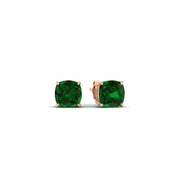
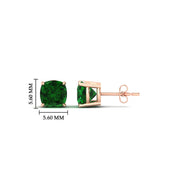
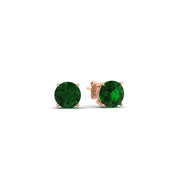
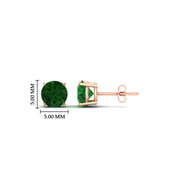
Stud earrings are the most versatile format and the most practical for everyday wear. A single emerald sits flush against the earlobe in a prong, bezel, or halo setting. Round emerald studs are the most classic configuration. Cushion cut emerald studs offer more face-up surface area per carat and a softer, vintage-influenced outline. Emerald cut stud earrings use the rectangular step-cut that was originally developed for this gemstone, with its clean linear geometry creating a graphic, architectural reading at the ear. Baguette and round mixed emerald studs combine baguette-cut emeralds with round accents in a halo frame, creating a more complex composition within the stud format. Carat weight options range from 1.00 ct to 10.00 ct per pair.
Halo earrings surround the emerald center with a ring of diamonds. The contrast between vivid green and white diamond brilliance is particularly effective in the earring format, where both elements appear at eye level and at close conversational distance. The diamond halo amplifies the emerald's apparent size and frames its color with brilliance, while also providing structural protection around the stone's perimeter. Classic round halo designs are available in 1.00, 2.00, and 3.00 ct center stone configurations, allowing selection based on preferred visual presence.
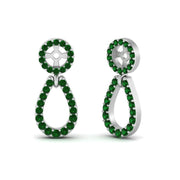
Drop earrings suspend the emerald below the earlobe on a short stem or chain. The movement of a drop earring catches and refracts light as the wearer moves, making the emerald's color appear to shift and deepen in ways a stationary stud cannot. The dazzling drop round halo design features a round emerald center in a diamond halo with pave accents along the bail, creating a full vertical composition from post to stone. The emerald cut drop halo lever back earrings use a rectangular emerald-cut emerald in a prong setting with a diamond pave halo, suspended on a lever back fitting.
Dangle earrings extend further below the earlobe with more pronounced movement and more vertical presence. These are the most statement-forward designs in the collection, suited to formal occasions and evening wear where the earrings are intended to be the primary focal element of the look. Emerald dangles with graduated diamond accents descending to an emerald terminal create a full-length composition that draws the eye downward and lengthens the visual line of the neck.
Hoop earrings set emeralds along the visible front face of a curved or circular metal hoop in channel or pave configurations. Emerald hoops combine the contemporary, everyday wearability of the hoop format with the stone's vivid color. Green emeralds in gold hoops are among the most historically coherent earring formats in fine jewelry, with precedent in Mughal and Victorian jewelry traditions where emeralds and gold were the primary pairing.
Teardrop earrings use a pear-shaped emerald or an overall pear-shaped composition to create an elongated form that visually lengthens the neck and frames the face. The teardrop format is one of the most flattering earring silhouettes across face shapes. Pear-cut emeralds in teardrop settings with diamond halos create a strong vertical composition with color at the tip.
Lever back earrings use a hinged clasp that closes securely over the earlobe post. This fastening style is particularly practical for longer drop and dangle designs where the earring's weight increases the risk of conventional butterfly backs loosening over time. The emerald cut drop halo lever back earring in this collection is a primary lever back design, combining the secure fitting with an emerald-cut center and a diamond halo drop.
How Emerald Color Interacts With Earring Metals
Yellow gold is emerald's most historically established metal pairing and the one with the deepest cultural precedent. Mughal, Renaissance, and Victorian jewelry all established yellow gold and emerald as a natural combination. The warm metal tone complements and amplifies the emerald's green in a way that cool metals do not. Yellow gold emerald earrings read as rich, classical, and deeply traditional. Several designs in this collection photograph most compellingly in yellow gold with emerald.
White gold and platinum provide cool, neutral contrast that lets the emerald's vivid green read at full intensity without warmth interaction from the metal. This pairing gives emerald earrings a crisp, contemporary character and is the most popular choice among buyers who prefer modern aesthetics. Platinum is more durable long-term, hypoallergenic, and needs no replating. White gold costs less at purchase but requires periodic rhodium plating to maintain its white appearance.
Rose gold creates a warm, complementary contrast with emerald green. The pinkish-rose metal tone against vivid green produces a romantic, contemporary pairing that works particularly well in drop and halo designs. The combination has strong fashion-forward appeal and suits buyers drawn to warmer contemporary aesthetics without the traditional formality of yellow gold.
All pieces are available in 14K and 18K versions of each metal. 14K gold is harder and more scratch-resistant. 18K gold carries higher pure gold content and deeper color tone.
Choosing Emerald Earring Size and Cut
For stud earrings, the relationship between carat weight, cut shape, and face-up dimensions determines how the emerald reads on the ear.
Emerald has a lower specific gravity than diamond (approximately 2.72 versus 3.52), meaning a 1-carat emerald appears larger face-up than a 1-carat diamond of the same cut. This density difference is a practical advantage in the earring format: buyers get more visual size per carat weight with emerald than with diamond.
Round emerald studs at 1.00 ct total weight provide clear color presence at conversational distance in a size appropriate for everyday professional and casual wear. Cushion cut emeralds at the same carat weight offer slightly more face-up area and a softer, more vintage outline.
Emerald cut earrings show more table surface area per carat due to the step-cut's broad, flat faceting. They read as visually larger than rounds of equivalent carat weight because the surface is less interrupted by facet angles. For buyers who want maximum face-up presence in a clean, geometric format, emerald cut is the most effective option.
For configurations above 2.00 ct total weight, drop and dangle formats distribute the visual weight more elegantly than larger single studs. These sizes deliver strong color presence across a room and are best suited to occasions-forward wear and evening contexts.
Emerald Earrings as Gifts
Emerald earrings are among the most thoughtful colored gemstone jewelry gifts because of the combination of visual distinctiveness, historic symbolism, and the personal meaning attached to the stone's birthstone and anniversary associations.
For May birthdays, emerald is the traditional birthstone, making emerald earrings the most personally specific fine jewelry gift for anyone born in May. Stud designs in practical carat weights suit everyday recipients. Halo and drop designs suit recipients who prefer more visible jewelry.
For 20th and 35th anniversaries, emerald is the traditional gemstone for both milestones. Drop earrings and halo earrings are the most appropriate format for anniversary gifting, combining the stone's symbolic meaning with a level of visual presence suited to a milestone occasion.
For Mother's Day, emerald earrings are a consistently meaningful gift. The stone's association with Venus, love, and the natural world suits the occasion, and round or cushion stud designs in practical sizes are appropriate for recipients who wear earrings daily.
For milestone celebrations including graduations, promotions, and personal achievements, emerald's historical association with wisdom, growth, and renewal makes it a fitting choice. The stone communicates intention and personal thought that separates it from a generic diamond alternative.
For fashion-forward recipients, emerald drop and dangle earrings make strong style statements for buyers who want to give something visually distinctive rather than conventionally expected.
Emerald Earring Care
Emerald requires more specific care than ruby or sapphire due to its lower Mohs hardness and natural cleavage. The following practices apply specifically to emerald and differ from general gemstone earring care.
Clean emerald earrings with warm water, mild dish soap, and a soft-bristle brush only. Scrub gently around each stone and setting, rinse thoroughly with lukewarm water, and dry with a lint-free cloth. This is the only recommended home cleaning method for emerald earrings.
Do not use ultrasonic cleaners on emerald earrings. Ultrasonic vibrations can widen natural fractures within the stone and compromise its structural integrity. This applies to lab-grown emeralds as well as natural ones, because the cleavage sensitivity is a physical property of the beryl mineral structure. Unlike ruby and sapphire earrings, which are safe for ultrasonic cleaning, emerald earrings must be cleaned manually.
Do not use steam cleaners. Sudden thermal shock from steam can stress the stone along its natural cleavage planes.
Apply hairspray, perfume, and cosmetics before putting on the earrings. Remove emerald earrings before swimming in chlorinated pools. Household chemicals including bleach, chlorine, and acetone can affect both the stone and metal settings over time.
Store emerald earrings separately from other jewelry, particularly pieces set with diamonds or sapphires, which can scratch the emerald surface. A soft earring holder or individual compartmentalized jewelry box is appropriate.
Check earring back fittings periodically to ensure they remain secure. Lever backs and butterfly backs can loosen with extended wear.
FAQs For Green Emerald Earrings For Women
1. Are emerald earrings durable enough for everyday wear?
Yes, with appropriate care. Emerald rates 7.5 to 8 on the Mohs hardness scale and resists everyday surface scratching. It is more brittle than ruby or sapphire along natural cleavage planes, but for earrings worn at the ear rather than on the hand, this is a lower practical concern. With correct cleaning and storage, emerald earrings are suitable for regular wear.
2. How does emerald's hardness compare to ruby or sapphire?
Ruby and sapphire both rate 9 on the Mohs scale. Emerald rates 7.5 to 8. Emerald resists everyday scratching but has greater brittleness along natural cleavage planes. The practical difference in earring use is minimal with correct care, but emerald requires manual cleaning rather than ultrasonic or steam methods.
3. Are the emeralds in this collection natural or lab-grown?
All emeralds are lab-grown. They are genuine emeralds, chemically and physically identical to mined stones, with superior clarity and more consistent vivid green color across both earrings in a pair than most natural emeralds in the same price range.
4. What does an emerald earring symbolize?
Emerald has historically symbolized love, growth, renewal, wisdom, and new beginnings. It was sacred to Venus in classical tradition and has appeared in royal and ceremonial jewelry across cultures for over 4,000 years. It is the May birthstone and the traditional 20th and 35th anniversary gemstone.
5. Can I clean my emerald earrings with an ultrasonic cleaner?
No. Ultrasonic cleaning is not safe for emerald earrings. The vibrations can widen natural fractures in the stone regardless of whether the emerald is lab-grown or natural. Clean only with warm water, mild dish soap, and a soft brush. This is the key care difference between emerald and ruby or sapphire earrings.
6. What metal works best with emerald earrings?
Yellow gold is the most historically established pairing and amplifies emerald's warmth. White gold and platinum provide clean contemporary contrast that lets the green read clearly. Rose gold creates a romantic, fashion-forward pairing that works particularly well in drop and halo designs.
7. What cut of emerald looks best in earrings?
Round cuts are the most versatile and widely worn. Cushion cuts offer more face-up area per carat with a softer outline. Emerald cuts provide a clean, geometric, architectural reading with maximum table surface area. The best cut depends on the setting style and the wearer's aesthetic preference.
8. Are emerald earrings a good May birthday gift?
Yes. Emerald is the May birthstone, making emerald earrings the most personally meaningful fine jewelry gift for anyone born in May.
9. What emerald earring styles are available at Fascinating Diamonds?
This collection includes round, cushion, emerald cut, and baguette-and-round stud earrings, classic round halo earrings, halo drop earrings, dangle earrings, hoop earrings, teardrop earrings, and lever back drop earrings in carat weights from 1.00 ct to 10.00 ct across all metal options.
10. Do emerald earrings pair well with an emerald necklace or ring?
Yes. Emerald earrings pair naturally with an emerald pendant necklace for a coordinated color story at face and neckline. They also coordinate with emerald engagement rings and wedding bands from the same collection. Pairing with colorless diamond pieces between keeps the arrangement balanced rather than monochromatic.