

Bezel Engagement Rings for Women
Bezel engagement rings enclose the center stone in a continuous metal rim, providing more protection than any other setting type while delivering a clean, modern profile. Every ring in this collection is available with a diamond, sapphire, emerald, ruby, or black diamond center stone in natural or lab-grown, set in 14K or 18K white gold, yellow gold, rose gold, black gold, or platinum. Styles range from petite solitaires and split shanks to three-stone designs, east-west orientations, vintage halo formats, and bezel solitaires with diamond-paved bands. Prices start at $806. All rings are made in the USA with free shipping and easy financing.
Explore Our Bezel Set Engagement Rings Collection








Real Customer Reviews
What a Bezel Setting Actually Does and Why It Matters
A bezel setting is a method of holding a gemstone in a ring by surrounding its girdle with a continuous rim of metal. The metal is pressed or shaped directly against the stone's circumference, securing it without the use of individual prongs. This is fundamentally different from the four-prong or six-prong settings that dominate most engagement ring collections, and the difference has real practical consequences.
In a prong setting, the diamond or gemstone is held by four to six individual metal claws that grip the girdle at specific points. This leaves the majority of the stone exposed on all sides. The benefit is maximum light exposure, which optimizes brilliance in a diamond. The tradeoff is vulnerability: exposed girdle edges can chip under impact, prong tips can catch on fabric and bend or loosen over time, and the stone has less structural protection overall.
In a bezel setting, the metal rim distributes any impact force across the full circumference of the stone rather than concentrating it at specific contact points. The girdle is protected on all sides. Corners, which are the most structurally vulnerable points on fancy-cut diamonds like princess, emerald, and marquise cuts, are enclosed. Prong tips, which are the most common failure point in traditional settings, are eliminated entirely.
This makes the bezel setting the most protective engagement ring format available, and the most practical choice for buyers with active lifestyles, physical jobs, or a preference for rings that require minimal maintenance attention.
Full Bezel vs. Half Bezel vs. Thin Bezel
These three terms describe variations in how much metal covers the stone, each with different visual and practical characteristics.
Full bezel settings encircle the stone's girdle completely with a continuous metal rim that runs flush around the entire perimeter. The stone cannot move within the setting and is fully protected on all sides. Full bezel settings have the cleanest, most graphic visual profile: the metal rim creates a defined outline around the stone that reads as bold and architectural. They suit buyers who prioritize maximum protection and a strong, deliberate design statement.
Half bezel settings secure the stone with metal on two opposing sides, typically the north and south ends, leaving the east and west sides of the girdle open. This exposes more of the stone and allows more light entry from the sides compared to a full bezel. The half bezel is a compromise between the protection of a full bezel and the light exposure of a prong setting. The half bezel round engagement ring and the half bezel oval east-west ring in this collection demonstrate how the open sides create a lighter, more delicate visual than their full bezel equivalents while retaining strong security at the most critical contact points.
Thin or petite bezel settings use a narrower metal rim than standard bezel designs. The rim sits lower against the stone and covers less of the girdle height, which allows more of the stone's crown to be visible above the setting. Thin bezels maximize the stone's visible face-up area while maintaining the setting's smooth, prong-free profile. The round cut petite bezel solitaire and petite oval bezel simple engagement ring in this collection are the primary thin bezel designs.
East-West Bezel Engagement Rings
East-west orientation rotates the center stone 90 degrees from its conventional position, setting it horizontally across the finger rather than vertically along the finger's length. In a prong setting, this orientation risks exposing the stone's pointed ends or corners to direct side impact. In a bezel setting, the continuous metal rim protects the stone at every angle regardless of orientation, making the bezel the ideal setting format for east-west designs.
The half bezel oval east-west solitaire ring in this collection uses this combination precisely. The oval diamond is set horizontally across the shank with the metal rim securing both ends of the stone. The east-west orientation makes the oval appear wider than it would positioned conventionally, visually elongating the finger in a different direction and creating a more graphic, fashion-forward silhouette than a standard north-south oval.
East-west bezel rings are among the most consistently searched contemporary engagement ring styles, appealing to buyers who want a ring that reads as both modern and structurally considered.
Bezel Engagement Ring Styles in This Collection
Solitaire bezels isolate the center stone as the sole visual element. The round cut petite bezel solitaire, petite oval bezel simple ring, and bezel set round split shank ring all use this format in different shank styles. The petite designs suit buyers who want a minimal, understated profile. The split shank bezel adds architectural complexity to the band while keeping the setting format clean.
Bezel solitaire with diamond band pairs a bezel-set center stone with a pave or channel-set diamond band, combining the clean modern setting with additional diamond coverage along the shank. The cushion cut bezel solitaire with diamond band is the primary design in this format at $2,173.50, showing how the bezel center and stone-set band create a complete composition without additional side stones.
Half bezel designs include the half bezel round engagement ring at $1,391.50 and the half bezel oval east-west solitaire at $2,014.80. Both use the partial surround format that exposes more of the stone's profile while retaining the protective contact points at the setting's primary structural positions.
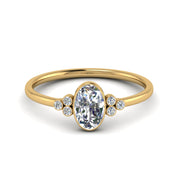
Three-stone bezel designs set the center stone and two flanking stones all in individual bezel mounts. The oval bezel three-stone solitaire at $1,444.40 and the bezel three-stone emerald cut ring at $1,179.90 both use this format, with the bezel mounts creating a clean, continuous visual rhythm across the three stones. The hexagon bezel three-round-stone ring at $1,192.55 uses hexagonal metal frames rather than round or oval bezels, creating a geometric, architectural reading that distinguishes it from conventional three-stone formats.
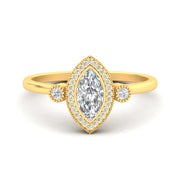
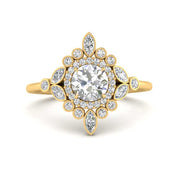
Vintage bezel designs incorporate historical design elements alongside the bezel setting. The vintage bezel marquise lab grown halo diamond ring at $1,596.20 uses a marquise center in a bezel mount surrounded by a milgrain-edged diamond halo, combining the bezel's protection with the decorative vocabulary of vintage jewelry. The halo filigree twisted engagement ring at $1,626.10 pairs a bezel center with a twisted filigree halo and band, referencing antique jewelry craftsmanship in a contemporary format.
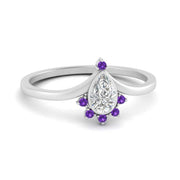
Pear bezel designs include the lab grown pear bezel wedding ring set at $1,922.80 and the bezel set pear crown engagement ring at $1,068.35. Pear-cut stones benefit particularly from bezel settings because the point at the narrow end, the most structurally vulnerable part of the pear shape, is fully enclosed by the metal rim. Prong-set pear diamonds expose this point to direct impact. Bezel-set pear diamonds protect it completely.
Black gold bezel rings are available across several designs in this collection, in 14K and 18K black gold. The black gold option creates a fully tonal pairing with black diamond center stones, or a strong high-contrast pairing with colorless diamonds where the dark metal frame and the bright stone create maximum opposition.
Diamond and Gemstone Options in Bezel Settings
Bezel settings accommodate the broadest range of center stone options in this collection, spanning colorless diamonds, blue sapphire, pink sapphire, orange sapphire, green emerald, ruby, black diamond, blue topaz, and purple amethyst.
The setting format is particularly well-suited to colored gemstones for a specific reason beyond protection. The continuous metal rim frames the stone's color, creating a defined border that makes the gemstone's hue appear more saturated and visually contained. A blue sapphire in a bezel setting appears to read as a deeper, richer blue than the same stone in a prong setting, because the metal rim creates a frame that concentrates the color within its outline. This framing effect benefits all colored center stones.
For emerald specifically, the bezel setting is the most recommended format given the stone's 7.5 to 8 Mohs hardness and natural cleavage. Emerald's brittleness makes the corner protection of a bezel setting particularly valuable. The bezel three-stone emerald cut ring and the petite oval bezel designs in emerald configuration are the most appropriate choices for an emerald engagement ring worn daily.
Natural and lab-grown diamonds are both available. All gemstone center stones (sapphire, emerald, ruby, black diamond) are lab-grown.
Bezel Settings and Light Performance
The most common concern buyers raise about bezel engagement rings is whether the metal rim reduces the diamond's brilliance. This is worth addressing precisely because the answer depends on the bezel type.
In a full bezel setting, the metal rim does block some side light entry into the stone compared to a prong setting. Light enters a diamond from above through the table and from the sides through the girdle and pavilion facets. A full bezel reduces side entry. For a well-cut round brilliant diamond where the primary light return is through the table, this reduction in side light has a moderate effect on overall brilliance, producing a diamond that is slightly less brilliant than the same stone in a prong setting.
In a half bezel setting, the open east and west sides allow significantly more side light entry than a full bezel. The light performance difference between a half bezel and a prong setting is small enough that most buyers cannot perceive it in normal observation conditions.
Thin and petite bezel designs minimize the light reduction by keeping the metal rim narrow and low, exposing more of the crown above the setting line.
For buyers who prioritize maximum diamond brilliance above all else, a prong setting remains the strongest choice. For buyers who prioritize protection, lifestyle practicality, or a clean modern aesthetic, the bezel's tradeoff is modest and worthwhile. For colored gemstone center stones, where brilliance is not the primary visual quality being evaluated, the bezel's light restriction has no meaningful effect.
Bezel Engagement Rings for Active Lifestyles
Bezel engagement rings are specifically recommended for buyers with physically active lifestyles. The reasons are practical and mechanical.
Prong-set engagement rings experience two failure modes that bezel settings eliminate. First, prong tips catch on fabric, hair, and other surfaces during physical activity. Over time, this bending stress loosens prong tips and can eventually pull them away from the stone, creating a path to stone loss. Bezel settings have no prong tips to catch or bend. The surface of the ring is smooth and continuous at the setting.
Second, exposed diamond girdle edges in prong settings are vulnerable to chipping under direct impact, particularly at corners in fancy-cut diamonds. A center stone that takes a hard knock during exercise, manual work, or sports can chip at the girdle edge if it makes direct contact with a hard surface. The bezel rim absorbs this impact force across the full circumference rather than concentrating it at the stone's surface.
For buyers who are nurses, surgeons, tradespeople, athletes, rock climbers, or anyone whose hands experience regular physical stress, the bezel setting is the most appropriate engagement ring format regardless of personal aesthetic preferences.
FAQs For Bezel Engagement Rings for Women
1. What is a bezel engagement ring?
A bezel engagement ring holds the center stone by surrounding its girdle with a continuous metal rim, rather than using individual prongs. This secures the stone completely and creates a clean, smooth setting profile with no exposed prong tips.
2. Are bezel engagement rings good for active lifestyles?
Yes. Bezel settings eliminate the two primary failure modes of prong settings: prong tips catching on fabric and bending loose, and exposed girdle edges chipping under impact. They are the most protective engagement ring setting and the best choice for physically active buyers.
3. Does a bezel setting reduce a diamond's brilliance?
A full bezel setting slightly reduces side light entry compared to prong settings. For a well-cut round diamond, the effect is moderate. Half bezel and thin bezel designs minimize this reduction significantly. For colored gemstone center stones, the bezel's light restriction has no meaningful effect on visual quality.
4. What is the difference between a full bezel and a half bezel?
A full bezel completely encircles the stone's girdle for maximum protection. A half bezel secures the stone from two opposing sides only, leaving the east and west girdle sections open for more light entry and a lighter visual profile. Both are more protective than prong settings.
5. What diamond shapes work best in a bezel setting?
Round and oval are the most commonly bezel-set shapes. Pear shapes benefit particularly from bezels because the vulnerable pointed tip is fully protected. Emerald and cushion cuts work well in three-stone bezel formats. Princess and marquise cuts benefit from the corner protection bezels provide.
6. Are bezel rings suitable for emerald center stones?
Yes, and they are specifically recommended for emerald. Emerald rates 7.5 to 8 on the Mohs hardness scale and has natural cleavage planes that make it more vulnerable to chipping than harder stones. A bezel setting protects the girdle and corners, making it the most appropriate setting for an emerald engagement ring.
7. What metals are available for bezel engagement rings at Fascinating Diamonds?
All rings are available in 14K and 18K white gold, yellow gold, rose gold, and platinum. Black gold in 14K and 18K is available on select designs, making this collection the only engagement ring category at Fascinating Diamonds to offer black gold.
8. What center stones are available in bezel engagement rings?
This collection accommodates the broadest center stone range in the engagement ring line: colorless diamond (natural and lab-grown), blue sapphire, pink sapphire, orange sapphire, green emerald, ruby, black diamond, blue topaz, and purple amethyst. All gemstone center stones are lab-grown.
9. What is an east-west bezel engagement ring?
An east-west bezel ring sets the center stone horizontally across the finger rather than the conventional vertical orientation. The bezel setting is ideal for east-west designs because the continuous metal rim protects the stone at all angles, including the exposed ends that would be vulnerable in a prong east-west setting.
10. What is the price range for bezel engagement rings at Fascinating Diamonds?
Prices start at $806 for the princess cut half bezel solitaire and reach $22,519 across 16 designs in full bezel, half bezel, thin bezel, three-stone, east-west, vintage halo, and solitaire-with-band formats across all center stone and metal options.