

Green Emerald Engagement Rings for Women
Emerald is one of the oldest gemstones in recorded jewelry history, valued for its vivid green color and its association with love, growth, and new beginnings. Every ring in this collection features a certified lab-grown green emerald, rated 7.5 to 8 on the Mohs hardness scale, set in 14K or 18K white gold, yellow gold, rose gold, or platinum with your choice of natural or lab-grown diamond accents. Styles span halo, solitaire, three-stone, bezel, split shank, vintage, and bridal set designs. Prices start at $1,150. All rings are made in the USA with free shipping and easy financing.
Explore Our Green Emerald Engagement Rings Collection














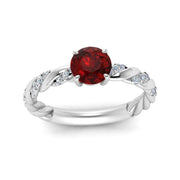




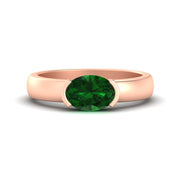


Real Customer Reviews
Why Emerald Engagement Rings Endure
Emeralds have been prized in fine jewelry for over 4,000 years. Ancient Egyptians mined emeralds in the Eastern Desert as early as 1500 BCE. Cleopatra famously claimed Egypt's emerald mines as her personal property and used the stones as diplomatic gifts. In Incan and Aztec civilizations, emeralds were considered sacred and were among the most highly guarded treasures. The Mughal emperors of India commissioned some of the world's largest carved emeralds as symbols of imperial power and divine favor.
Their hold on the imagination has not weakened. Elizabeth Taylor's collection of Colombian emeralds remains a benchmark for how the stone reads in modern fine jewelry. Jacqueline Kennedy wore emerald and diamond pieces that helped define the aesthetic of American luxury in the 1960s. More recently, celebrities including Halle Berry, Zoe Saldana, and Olivia Wilde have chosen emerald engagement rings, contributing to a sustained resurgence in the stone's popularity.
The reason is not purely aesthetic. Emeralds are one of the few colored gemstones where color, history, and symbolism converge with enough cultural weight to make them a genuine alternative to diamonds at the engagement ring level.
Lab-Grown Green Emerald Engagement Rings
Fascinating Diamonds offers lab-grown emeralds exclusively. Lab-grown emeralds are genuine emeralds. They share the same chemical composition (beryllium aluminum silicate, Be₃Al₂Si₆O₁₈, with chromium and vanadium as coloring agents), the same crystal structure (hexagonal beryl), and the same optical properties as mined emeralds. The difference is origin and, as a direct consequence, clarity and consistency.
Natural emeralds almost always contain significant inclusions, a network of fractures, liquid-filled cavities, and crystal growth imperfections that gemologists refer to collectively as "jardin" (the French word for garden). These inclusions are so universal in natural emeralds that the trade accepts heavily included stones routinely, far more so than with sapphires or rubies. Most natural emeralds are also treated with cedar oil or resin to fill surface-reaching fractures, a disclosure-required process that temporarily improves clarity.
Lab-grown emeralds are produced through the hydrothermal method, which replicates natural crystal growth at elevated temperatures and pressures in a controlled environment. The result is an emerald with the same physical and optical properties as a mined stone, but with fewer inclusions and more consistent color distribution. For an engagement ring worn daily and expected to hold visual clarity over decades, these are meaningful advantages. Lab emeralds also carry no concerns around mining provenance or fracture-fill treatment stability.
Emerald Quality Factors: Color, Clarity, Cut, and Size
Color: Color is the dominant quality factor in emerald evaluation and accounts for the majority of a stone's value and visual impact. The finest emeralds display a vivid, pure green with a slight bluish-green undertone, a combination associated historically with Colombian material and considered the benchmark hue. Tone matters as much as hue. Stones that are too light lack the presence that makes emeralds striking. Stones that are too dark lose transparency and read as flat. The ideal is a medium to medium-deep green that is saturated without being opaque and retains its character under both natural daylight and warm indoor lighting.
Secondary color tones (yellow-green or blue-green) influence perceived quality. A slight bluish-green secondary tone is generally considered desirable. A yellowish-green secondary tone is less valued, though preferences vary by region and buyer.
Clarity: Lab-grown emeralds offer consistently higher clarity than most mined emeralds at equivalent price points. Eye-clean emeralds, where no inclusions are visible from the face-up position without magnification, are far more common in lab-grown stones than in natural ones. For engagement rings, eye clarity is particularly important because the ring is observed in close proximity and under varied lighting throughout its lifetime.
Cut: Emerald cut shapes include the eponymous emerald cut (a rectangular step-cut with truncated corners), oval, cushion, round, and marquise. The emerald cut was originally developed specifically for emerald, as its step faceting concentrates color and its design minimizes the stress on the stone's corners. Oval and cushion cuts are the next most common in engagement ring applications. The cut must balance color concentration, proportional symmetry, and structural integrity given that emerald has natural cleavage planes.
Carat size and proportion: Emerald has a lower specific gravity than diamond (approximately 2.72 versus 3.52), meaning a 1-carat emerald appears larger face-up than a 1-carat diamond of the same cut. This density difference makes emeralds visually impressive relative to their carat weight, a practical advantage for buyers prioritizing face-up size.
Durability and Everyday Wear
Emerald rates 7.5 to 8 on the Mohs hardness scale. This is softer than sapphire and ruby (both 9) and diamond (10), which is the most important durability distinction buyers should understand before selecting an emerald engagement ring.
At 7.5 to 8, emeralds resist scratching from most everyday contact. Dust and common environmental abrasives rate below 7 on the Mohs scale, so routine wear does not typically scratch the stone's surface. The greater concern with emerald is brittleness. Emerald has natural cleavage planes and can chip or fracture under sharp blunt impact, particularly at corners or girdle edges.
This does not disqualify emerald as an engagement ring stone. Millions of emerald engagement rings have been worn daily for generations without issue. It does mean that setting choice matters more for emerald than for sapphire or ruby. Bezel settings, which enclose the stone's girdle in a continuous metal rim, offer the most protection. Halo settings distribute impact across the diamond surround rather than directly onto the emerald. Corner-protecting settings for emerald-cut stones are standard in well-designed rings.
Buyers with highly active lifestyles or jobs involving manual work should factor this in when choosing between an emerald and a harder gemstone alternative.
Best Settings for Emerald Engagement Rings
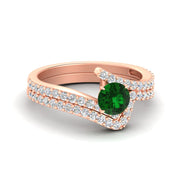
Halo settings are among the most popular choices for emerald engagement rings, and for practical as well as aesthetic reasons. The diamond surround frames the emerald's color, enhances perceived size, and provides structural protection around the stone's perimeter. Oval halo and round halo designs dominate this category. The swirl-split halo and hidden halo options in this collection modernize the format without sacrificing the protective benefit.
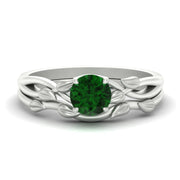
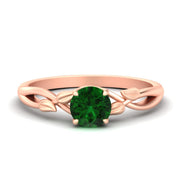
Solitaire settings direct attention entirely to the emerald's color. Vine, leaf, and petite twisted band designs in this collection give solitaire emerald rings organic character that suits the stone's natural associations. The rope solitaire design offers a more graphic, architectural feel within the same minimalist framework.
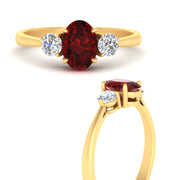
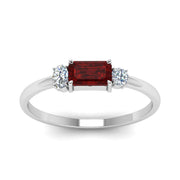
Three-stone settings pair the emerald with two flanking diamonds, most commonly in oval or emerald cut shapes. The diamond flankers provide contrast that intensifies the green and add overall brilliance to the ring. The alternate three-stone design in this collection uses an emerald-cut center emerald with step-cut diamond side stones for a coordinated, linear look.
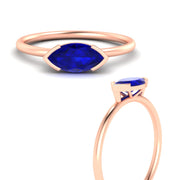
Bezel settings enclose the emerald in a continuous metal rim. This is the setting type most recommended for emerald specifically, given the stone's brittleness relative to sapphire or ruby. The unusual bezel and half bezel east-west designs in this collection offer bezel protection in contemporary horizontal and asymmetric orientations.
Vintage and antique-inspired settings suit emerald naturally. The stone's centuries-long history in royal and aristocratic jewelry means milgrain detailing, leaf and cushion motifs, and antique-finish metalwork all feel historically coherent. The leaf cushion vintage and antique round designs in this collection interpret this tradition in wearable contemporary formats.
Split shank and cathedral settings elevate the emerald and give the ring architectural complexity. The split shank emerald-cut design and oval petite cathedral ring in this collection demonstrate how these formats work with the stone's distinct profile.
Bridal ring sets that pair the emerald engagement ring with a coordinated band are available in this collection, with crossover and single-prong set designs offered as complete wedding sets.
Metal Pairings for Emerald Engagement Rings
Yellow gold is the most historically established pairing for emerald, with precedent in Mughal, Renaissance, and Victorian jewelry traditions. The warm metal tones complement and amplify emerald's green in a way that cool metals do not. Yellow gold emerald rings read as rich, warm, and traditional, and several designs in this collection, including the leaf cushion vintage and unconventional gemstone ring, were designed with yellow gold in mind.
White gold and platinum provide cool, neutral contrast that lets the emerald's green stand independently without the warmth interaction of yellow metal. This pairing gives emerald rings a crisp, contemporary reading and is the most popular choice among modern buyers who prioritize a clean, graphic aesthetic.
Rose gold creates a warm contrast with emerald green that is distinct from yellow gold. The pink-rose metal tone against vivid green produces a complementary color relationship that reads as romantic and contemporary. Several designs in this collection, including the oval halo milgrain and crossover rings, translate particularly well in rose gold.
All rings are available in 14K and 18K versions of each metal. 14K gold is harder and more scratch-resistant. 18K gold carries a higher pure gold content (75%) and a richer color tone.
Emerald Engagement Ring Care
Emeralds require more attentive care than sapphires or rubies due to their lower hardness and natural cleavage. The following practices protect the stone and extend the ring's life.
Clean emerald rings with warm water, mild dish soap, and a soft-bristle brush only. Scrub gently around the setting, rinse thoroughly with lukewarm water, and dry with a lint-free cloth. This is the only recommended home cleaning method for emeralds.
Do not use ultrasonic cleaners on emerald rings. Ultrasonic vibrations can widen existing fractures, loosen stones from settings, and damage any fracture-filled treatments present in the stone. Lab-grown emeralds from Fascinating Diamonds do not carry fracture-fill treatments, but ultrasonic cleaning is still not recommended due to the stone's natural cleavage sensitivity.
Do not use steam cleaners. Sudden thermal shock from steam can stress the stone and widen internal fractures.
Remove emerald rings before activities involving impact, chemicals, extreme heat, or heavy manual work. Common household chemicals including bleach, chlorine, and acetone can damage emeralds. Remove the ring before swimming in chlorinated pools and before using cleaning products.
Store emerald rings separately from harder gemstones, particularly diamonds, which can scratch emerald surfaces. A soft pouch or individual ring box compartment is appropriate.
Annual professional inspection is recommended to verify prong integrity and setting security. This is particularly important for prong-set designs where the stone is more directly exposed.
FAQs For Green Emerald Engagement Rings for Women
1. Are emerald engagement rings durable enough for everyday wear?
Yes, with appropriate care and setting choice. Emeralds rate 7.5 to 8 on the Mohs hardness scale and resist everyday scratching. They are more brittle than sapphire or ruby and benefit from protective settings such as bezel or halo designs. Worn with reasonable care, an emerald engagement ring is suitable for daily wear over a lifetime.
2. What does an emerald engagement ring symbolize?
Emerald has historically symbolized love, growth, new beginnings, wisdom, and harmony. It is associated with Venus in classical mythology and with the heart chakra in various Eastern traditions. As the May birthstone, it carries additional personal significance for couples with May birthdays or anniversaries.
3. Are lab-grown emeralds real emeralds?
Yes. Lab-grown emeralds are genuine emeralds with the same chemical, physical, and optical properties as mined emeralds. They are distinguished from natural stones only by their origin.
4. Why do you sell lab-grown emeralds instead of natural?
Lab-grown emeralds offer superior clarity and more consistent color than most commercially available natural emeralds at equivalent prices. Natural emeralds are almost universally heavily included and fracture-filled. Lab-grown emeralds deliver better visual performance per dollar and require no fracture-fill treatment disclosures.
5. Can I clean my emerald engagement ring in an ultrasonic cleaner?
No. Ultrasonic cleaning is not safe for emeralds. Clean only with warm water, mild soap, and a soft brush.
6. What is the price range for emerald engagement rings at Fascinating Diamonds?
Rings in this collection range from $1,150 to $4,668, across 24 designs in multiple setting styles, metal types, and diamond accent options.
7. What metal works best with an emerald engagement ring?
Yellow gold is the most historically established pairing and amplifies the green visually. White gold and platinum provide clean, contemporary contrast. Rose gold creates a complementary warm contrast that suits romantic and modern aesthetics equally.
8. What emerald shapes are available at Fascinating Diamonds?
This collection includes lab-grown emeralds in round, oval, cushion, emerald, and marquise cuts across halo, solitaire, three-stone, bezel, cathedral, split shank, vintage, and bridal set formats.
9. Is emerald harder than sapphire or ruby?
No. Sapphire and ruby both rate 9 on the Mohs scale. Emerald rates 7.5 to 8. Emerald is durable enough for an engagement ring with appropriate setting choice and care, but sapphire and ruby offer greater scratch and impact resistance.